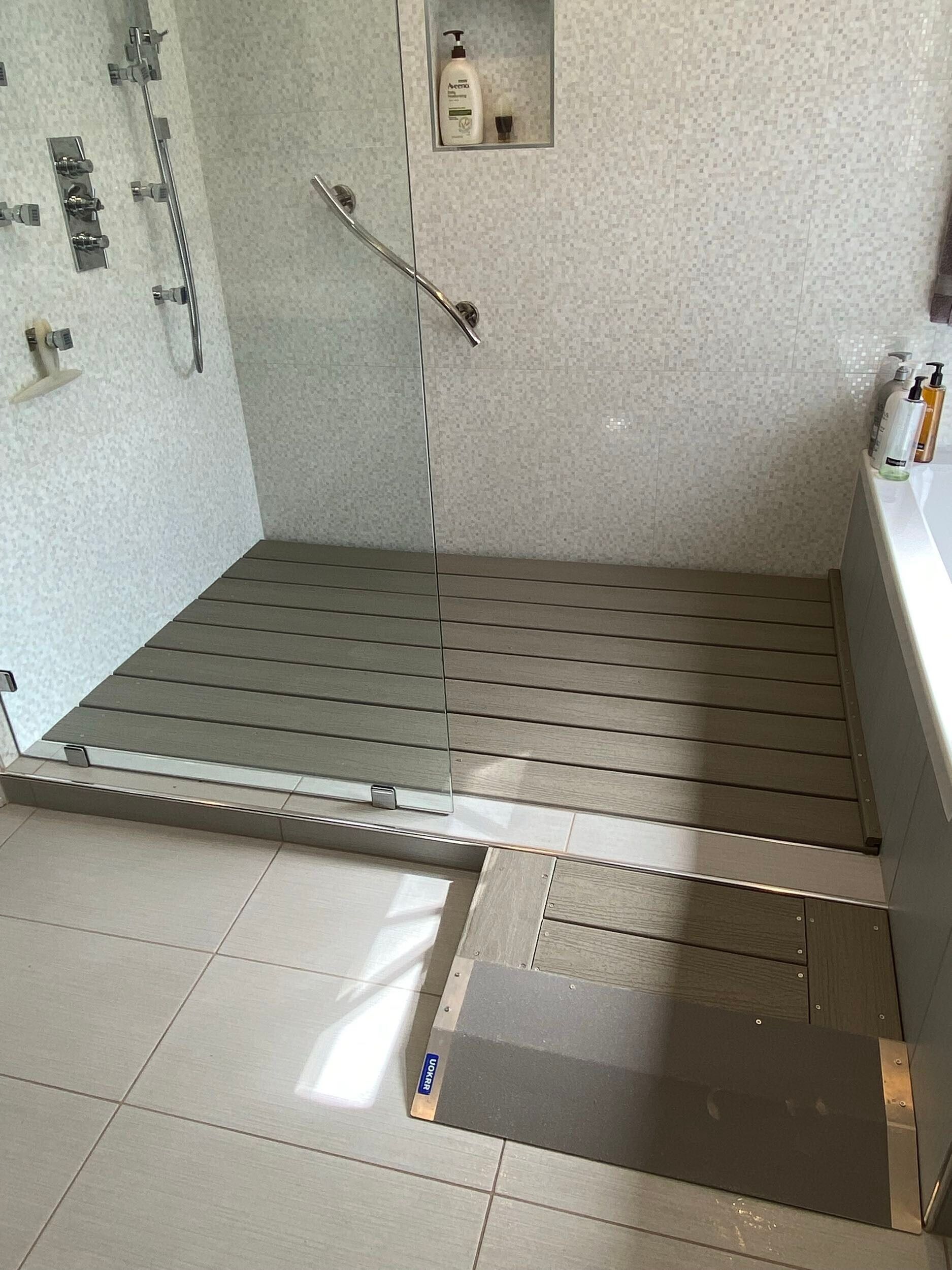
This Ramp Helped a Tucker Resident Remain Safely at Home

January 14, 2026

After a fall at work, a Tucker resident faced surgery, rehabilitation, and a difficult reality: returning home to a house he could no longer safely enter.


Steps at the front door became an immediate barrier. What should have been a moment of relief—coming home after rehab—was instead filled with frustration and uncertainty.


Our team at Accessible Living Atlanta designed and installed a custom ramp, restoring safe and reliable access in and out of the home. But accessibility didn’t stop at the front door.


To support long-term independence, we also completed key interior modifications:

  • safer, user-friendly bathroom with improved access and stability
  • Bedroom modifications that supported mobility and daily routines
  • Kitchen adjustments that allowed him to prepare meals comfortably and independently


The result was more than a ramp — it was a home that worked with him, not against him.

This project is a reminder that home modifications are about restoring dignity, independence, and confidence — especially after life-changing injuries.
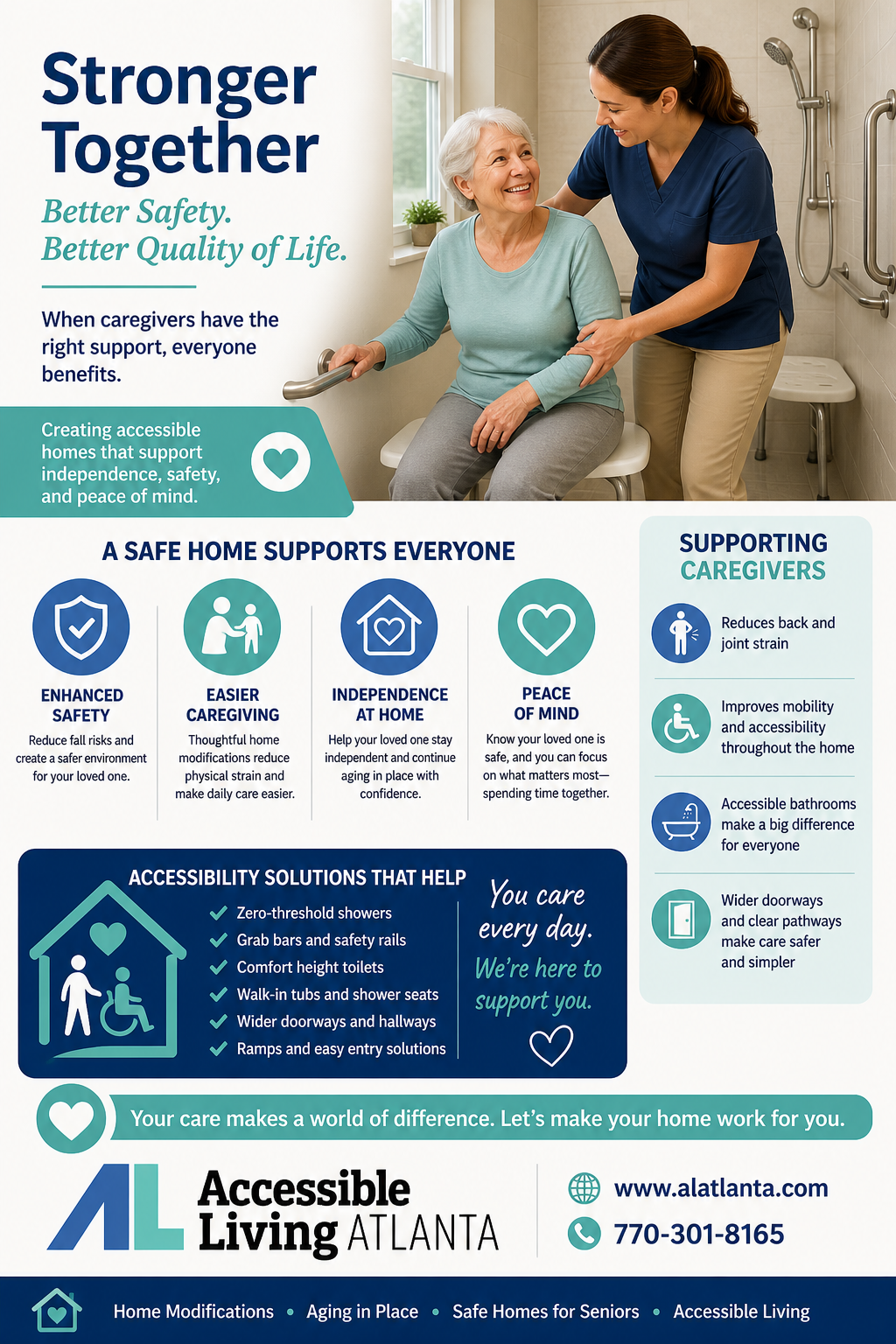
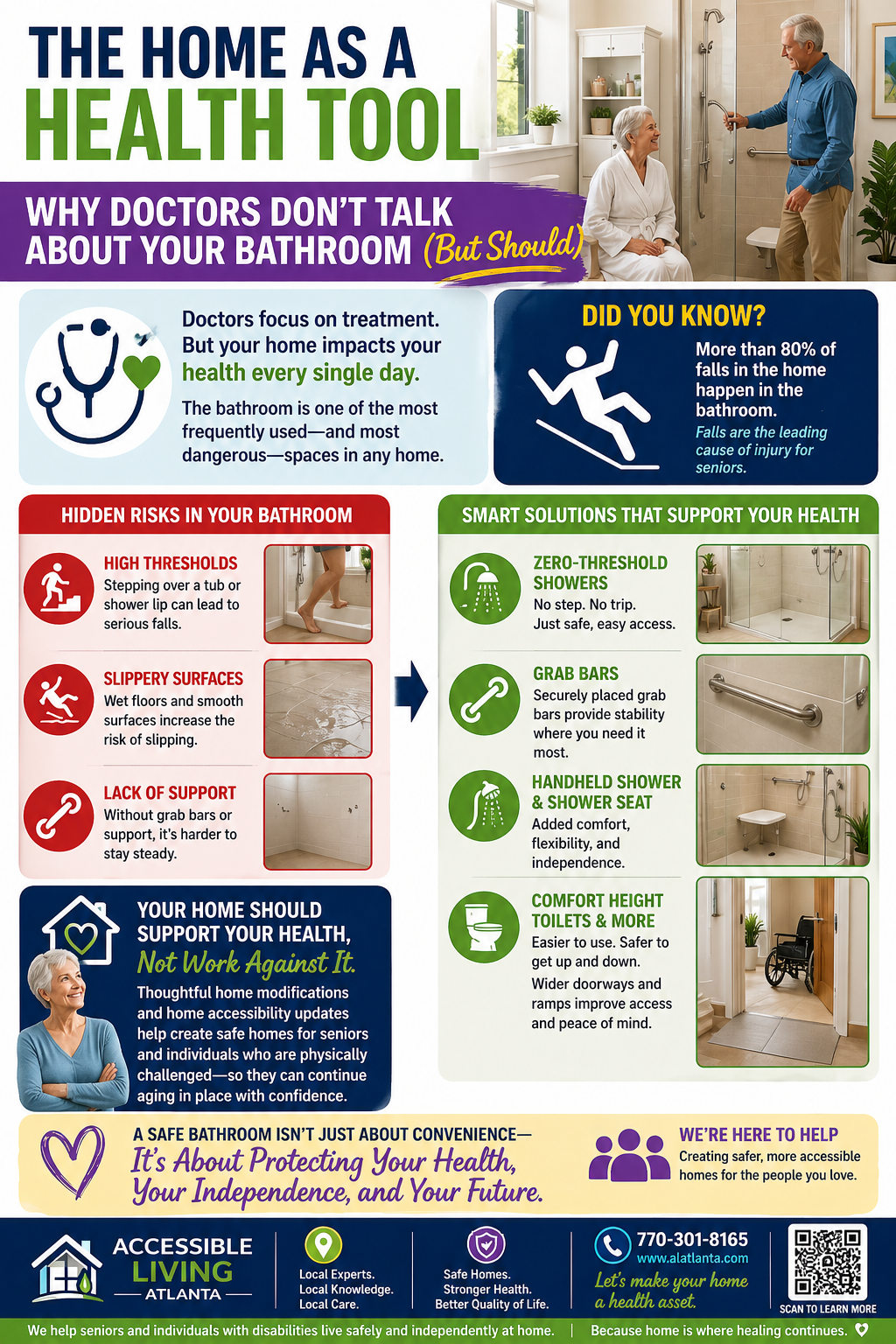
Infographic: preventing hospital readmission at home. Elderly people with mobility issues. Home modifications suggestions.
January 13, 2026
Many hospital readmissions don’t happen because recovery failed — they happen because the home environment wasn’t ready. After discharge, patients often return home with: Reduced strength or balance Temporary or permanent mobility challenges New medical equipment Increased fall risk Quick, targeted home modifications can make a critical difference, including: Grab bars and handrails Temporary ramps or threshold solutions Improved lighting and clear pathways Bathroom safety upgrades These timely changes help reduce falls, increase confidence, and support safer recovery — often preventing an unnecessary return to the hospital. At Accessible Living Atlanta , we work with families and healthcare partners to create safe, user-friendly homes that support healing, independence, and dignity
Infographic comparing myths vs. reality about home modification.
January 8, 2026
There are many misconceptions around home accessibility and modification — and these myths often prevent families from planning ahead. Here are a few of the most common myths we hear: 🔹 Myth: Medicare pays for home modifications ✅ Reality: Medicare generally does not cover accessibility upgrades. 🔹 Myth: Home modification is for everyone ✅ Reality: While it can be life-changing for many, some individuals simply don’t need it. 🔹 Myth: Renters can modify without approval ✅ Reality: Landlord consent is typically required. 🔹 Myth: Modifications look institutional ✅ Reality: Today’s designs are safe, discreet, and beautiful. 🔹 Myth: You should wait until there’s a crisis ✅ Reality: Proactive planning reduces risk and stress. At Accessible Living Atlanta , we believe education is the first step toward independence and dignity at home.
Comparison: before and after home modifications for accessibility. Includes a ramp, wider doorway, and zero-threshold shower.
December 23, 2025
At Accessible Living Atlanta , we recently worked with a client whose world changed overnight after a serious injury. What was once a comfortable, familiar home quickly became a place filled with obstacles and uncertainty.
More Posts