
Preventing Hospital Readmission Starts at Home
January 13, 2026
Many hospital readmissions don’t happen because recovery failed — they happen because the home environment wasn’t ready.
After discharge, patients often return home with:
- Reduced strength or balance
- Temporary or permanent mobility challenges
- New medical equipment
- Increased fall risk
Quick, targeted home modifications can make a critical difference, including:
- Grab bars and handrails
- Temporary ramps or threshold solutions
- Improved lighting and clear pathways
- Bathroom safety upgrades
These timely changes help reduce falls, increase confidence, and support safer recovery — often preventing an unnecessary return to the hospital.
At
Accessible Living Atlanta, we work with families and healthcare partners to create
safe, user-friendly homes that support healing, independence, and dignity
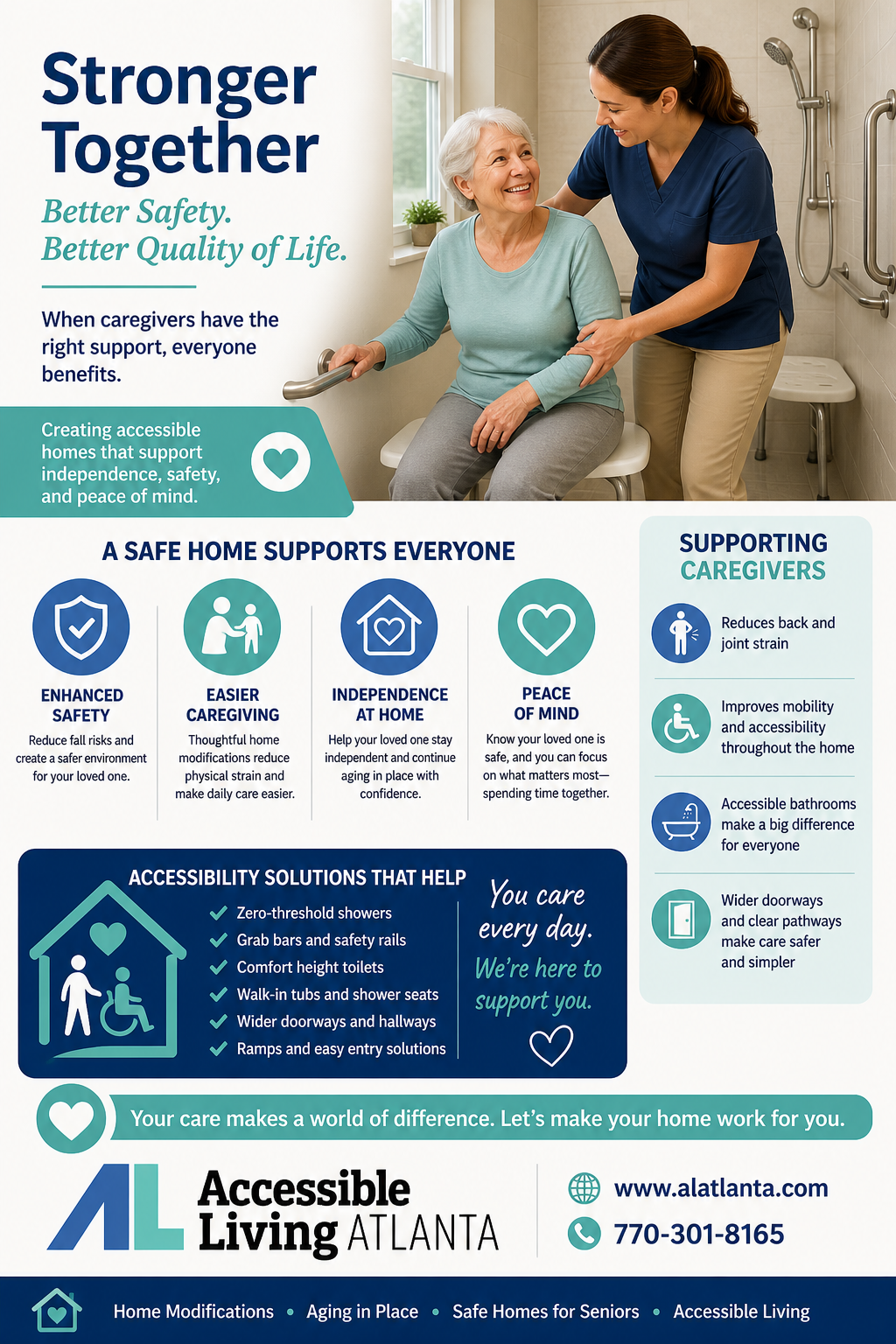
There’s a group of people who don’t always get recognized… The caregivers. They step in quietly. They adjust their routines. They do what needs to be done—every single day. Helping someone out of bed. Assisting in the bathroom. Navigating spaces that were never designed for two people. Over time, the physical toll adds up. Sore backs. Fatigue. The constant worry of doing something the wrong way. And here’s something we’ve seen time and time again: It’s not a lack of strength… it’s the environment. Most homes were never designed to support caregiving. That’s where home modification and home accessibility make a meaningful difference. Simple changes can help: • Reduce physical strain on caregivers • Improve safety for both individuals • Create more functional, supportive spaces Features like: ✔ Accessible bathrooms with zero-threshold showers ✔ Properly placed grab bars ✔ Wider doorways and better layout flow These changes help create safe homes for seniors and individuals who are physically challenged—while also protecting the caregiver. Because aging in place should support everyone in the home… not just the person receiving care.
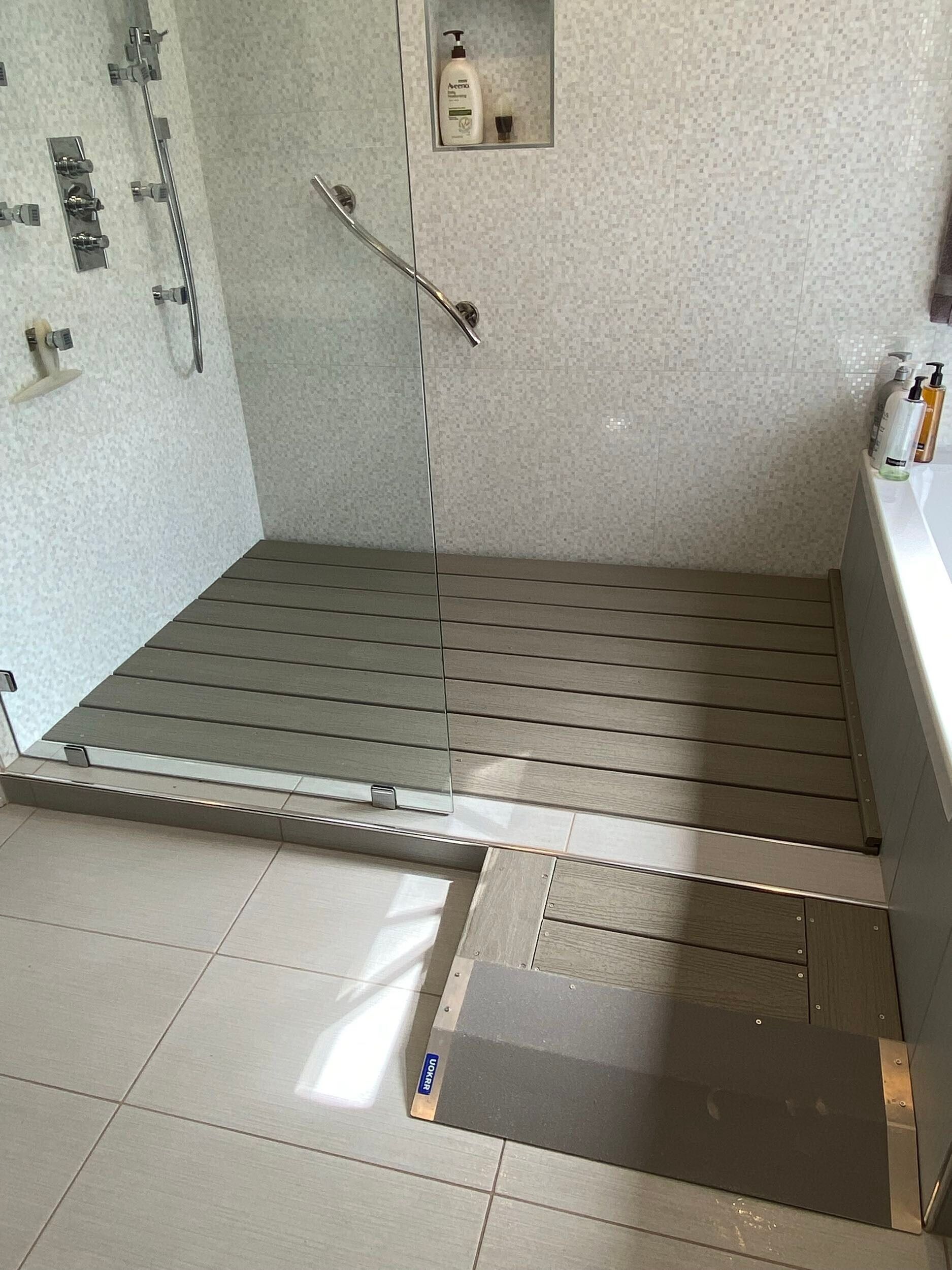
Most people don’t plan for change in their home.
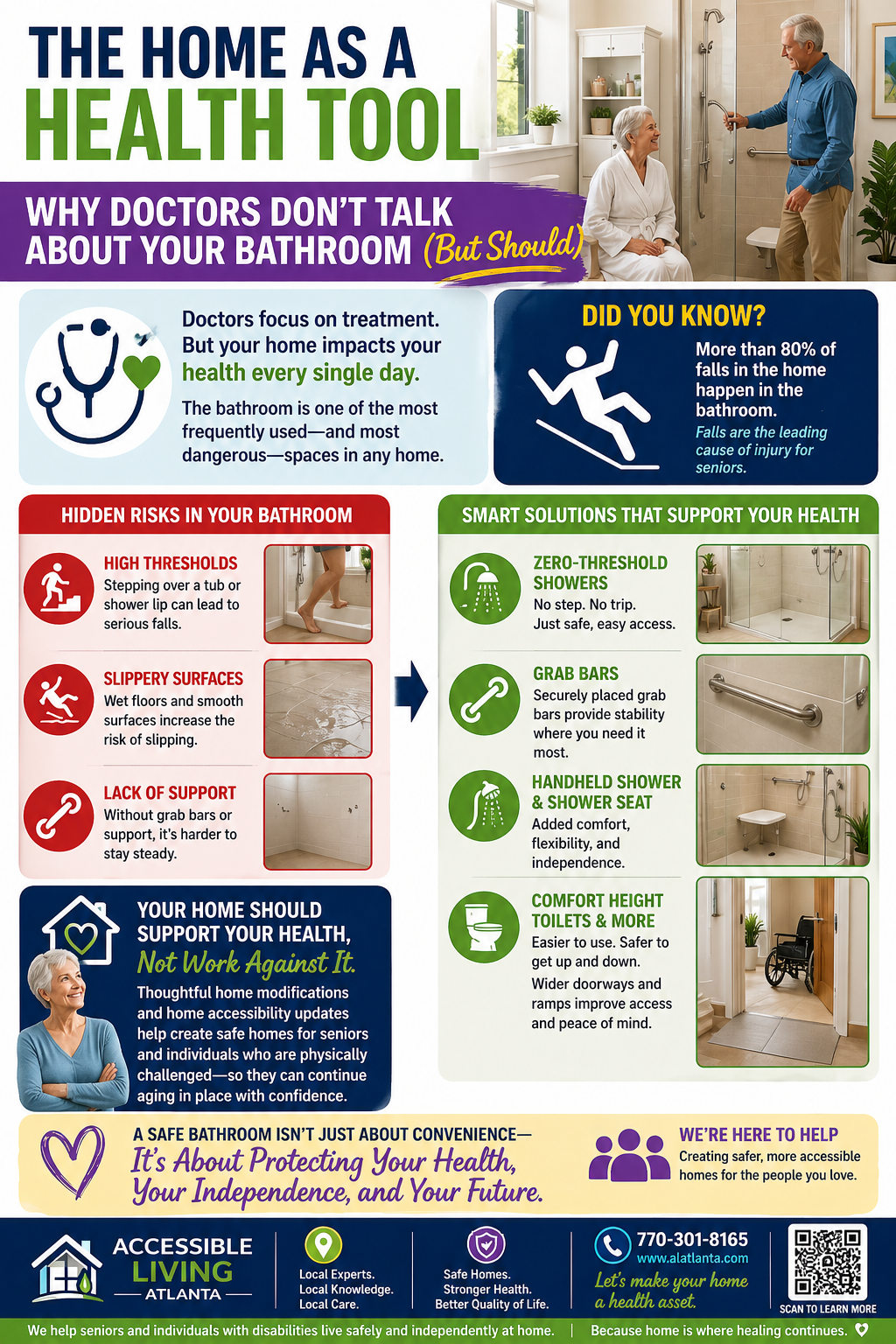
When we think about health, we usually think about doctors, medications, and treatment plans. But there’s one place that impacts health every single day… The bathroom. It’s one of the most frequently used spaces in any home— and one of the most dangerous. Slippery surfaces. High step-over tubs. Lack of properly placed grab bars . Yet, it’s rarely part of the conversation. Doctors focus on recovery. But what happens after someone goes home? That’s where home modification and home accessibility play a critical role. Simple changes can make a meaningful difference: Zero-threshold showers to eliminate trip hazards Properly installed grab bars for stability Accessible bathrooms designed for safety and ease of use These are not luxury upgrades. They are essential steps in creating safe homes for seniors and individuals who are physically challenged . Because aging in place successfully isn’t just about health care— It’s about the environment that supports it every day.