
Who are the beneficiaries of home modification to create a more user-friendly home?
August 27, 2024
Home modifications to create a more user-friendly environment primarily benefit several groups:
- Older Adults and Seniors: Aging individuals often require modifications to maintain independence and safety in their homes. This includes installing grab bars, stairlifts, ramps, and widening doorways for wheelchair access.
- People with Disabilities: Individuals with physical, sensory, or cognitive disabilities benefit from modifications like accessible bathrooms, lower countertops, adapted lighting, and voice-activated technology.
- People Recovering from Injury or Surgery: Those recovering from surgeries or injuries may temporarily need home modifications to navigate their living spaces more easily. This can include temporary ramps, shower seats, and handrails.
- Caregivers: Family members or professional caregivers who assist individuals with mobility issues, disabilities, or chronic illnesses benefit from modifications that make caregiving tasks easier and safer, such as walk-in showers and adjustable-height counters.
- Families with Young Children: Childproofing the home, with features like safety gates, corner protectors, and secured cabinets, creates a safer environment for young children.
- People with Chronic Health Conditions: Those with conditions like arthritis, heart disease, or vision impairment may need modifications to reduce strain and increase safety, such as lever-style door handles, non-slip flooring, and improved lighting.
- Individuals Planning for Future Needs: Homeowners who anticipate future mobility issues or are planning for "aging in place" might modify their homes proactively to accommodate potential future needs.
Overall, home modifications enhance safety, accessibility, and comfort, improving the quality of life for a wide range of individuals.
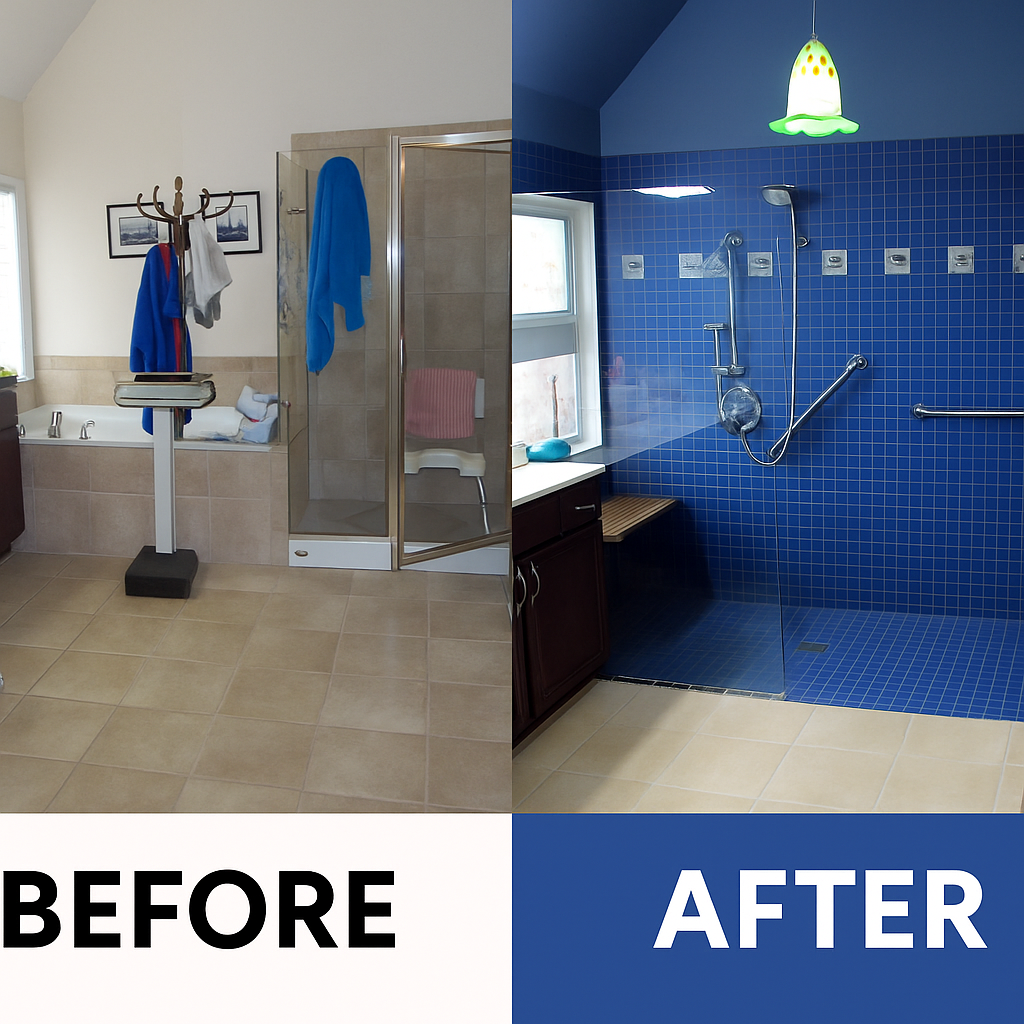
It only takes one moment. A step into a shower. A loss of balance. And suddenly, everything changes. We recently worked with a client in Marietta who experienced a fall stepping over the threshold of her walk-in shower. There were no grab bars—nothing to steady herself. She broke her hip. After surgery and several weeks in rehab, the question became: “How do we make sure this doesn’t happen again?” Before she returned home, we were able to make several important home modifications to improve home accessibility and create a safer environment: • A zero-threshold shower for easy, safe entry • Properly placed grab bars for stability • A handheld shower and built-in shower seat • A comfort height toilet with additional grab bars • A widened doorway for better wheelchair access • A portable ramp in the garage for safe entry While she may eventually transition from a wheelchair to a walker, her home is now prepared to support her every step of the way. This is what aging in place should look like. Creating safe homes for seniors and individuals who are physically challenged isn’t just about construction— It’s about restoring confidence, safety, and independence. And moments like this remind us why this work truly matters.
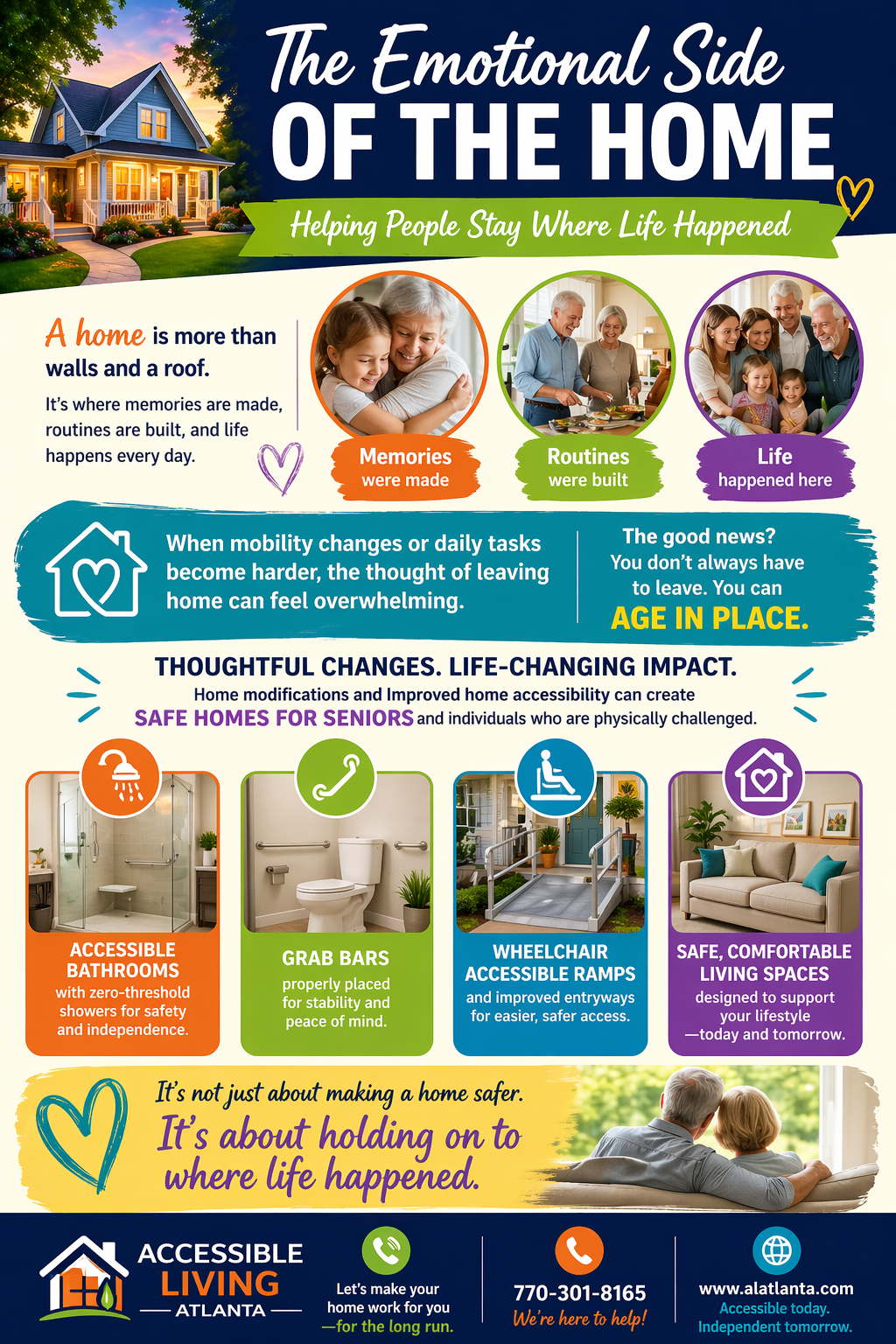
A home is more than a structure—it’s where life happened. Where routines were built. Where memories were made. Where comfort became familiar over time. That’s why the conversation around aging in place is not just about safety… It’s about connection. For many seniors and individuals who are physically challenged , the idea of leaving home isn’t just a practical decision—it’s an emotional one. I’ve seen families face this moment. Trying to balance safety with familiarity. Independence with peace of mind. The good news is—there’s another way to look at it. Through thoughtful home modification and improved home accessibility , it’s often possible to create safe homes for seniors without losing what makes a home feel like home. Features like: • Accessible bathrooms with zero-threshold showers • Properly placed grab bars • Wheelchair accessible ramps and improved entryways These changes aren’t about altering the home—they’re about supporting the people who live in it. Because sometimes, the goal isn’t just to make a home safer… It’s to help someone continue aging in place — right where life happened.
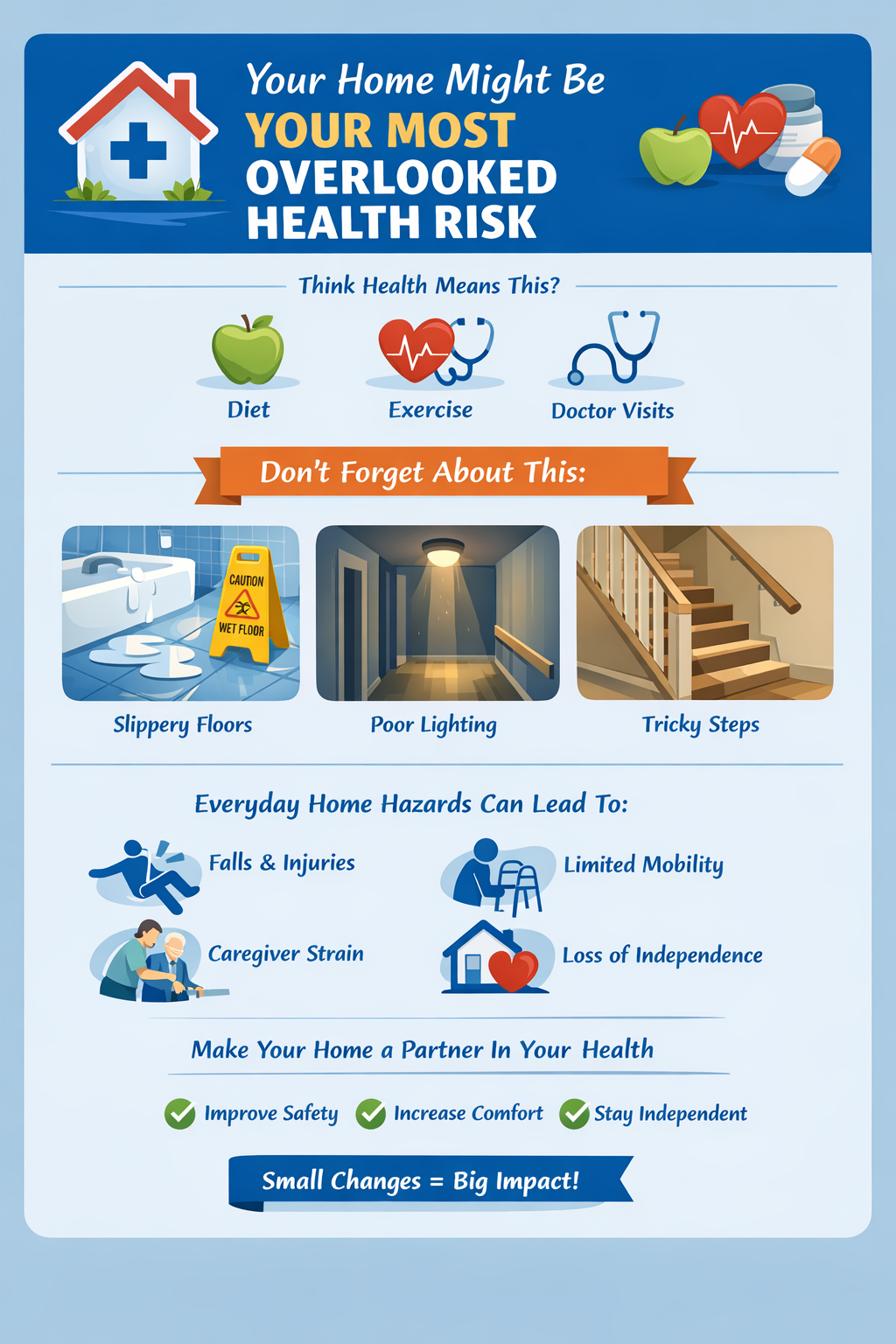
Most people think of their health in terms of doctor visits, medications, diet, and exercise. But there’s one critical factor that is often overlooked… The home environment. Over the years, we’ve seen a consistent pattern: Health issues are not always caused by illness alone—they are often made worse by the home itself. A small step into a shower becomes a fall risk Poor lighting increases instability Narrow doorways limit mobility Everyday tasks become physically demanding What starts as a minor inconvenience can quickly become a serious safety concern. The reality is this: A home that is not designed to support you can quietly work against your health every single day. On the other hand, a properly designed, accessible home: Reduces fall risks Supports mobility and independence Eases the burden on caregivers Encourages confidence in daily living This isn’t about major renovations in every case. Sometimes, small, thoughtful changes can make a meaningful difference. As more individuals choose to remain at home longer, it’s time to expand the conversation: 👉 Health isn’t just managed in hospitals—it’s lived at home.