Technology & Accessibility: Smart Solutions for Aging in Place
September 17, 2025

Technology is no longer a luxury or a trendy upgrade — it’s becoming one of the most powerful tools for helping seniors and those with physical challenges live safely and independently in their own homes.


At Accessible Living Atlanta, we see every day how traditional modifications—like zero-threshold showers, widened doorways, and ramps—are even more effective when paired with the right smart-home technology. Here are a few of the solutions making the biggest impact:

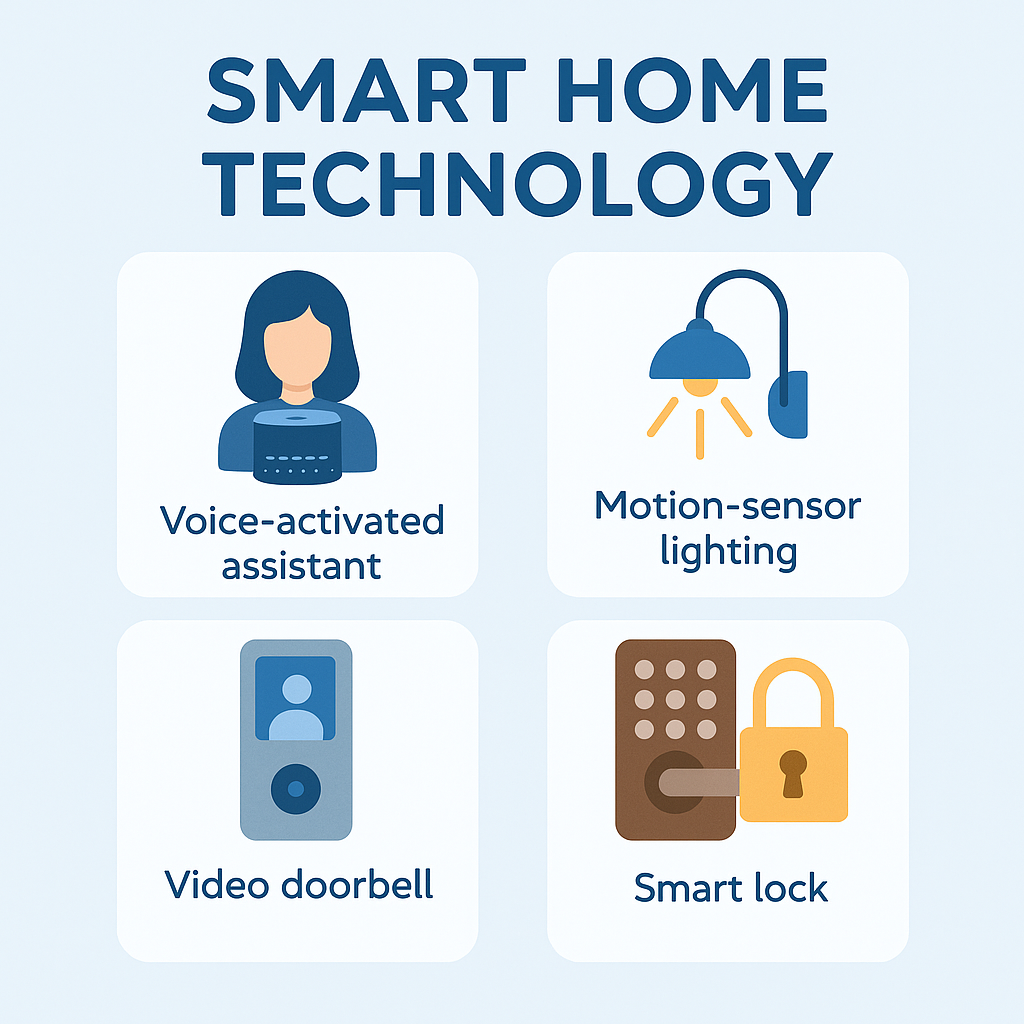
🔹Voice-Activated Assistants & Smart Speakers – Simple voice commands can turn on lights, adjust thermostats, or lock doors. For someone with limited mobility or arthritis, this means more independence and less reliance on caregivers for everyday tasks.


🔹Motion-Sensor Lighting – Hallways and bathrooms automatically light up when someone enters, dramatically reducing the risk of nighttime falls.


🔹Video Doorbells & Smart Locks – Whether it’s a caregiver arriving or a package delivery, residents and family members can see who’s at the door and unlock it remotely, providing both security and convenience.


🔹Telehealth & Remote Monitoring – Wearable devices or smart sensors can alert family members or healthcare providers if a fall occurs, or even track vital signs for ongoing health management.


When thoughtfully integrated, these tools create a living environment that is not only safe and functional, but also empowering. Aging in place should mean living with dignity, and technology—when combined with our carefully planned modifications—makes that possible.


👉 Which smart-home upgrade do you think would make the biggest difference for your family or clients?
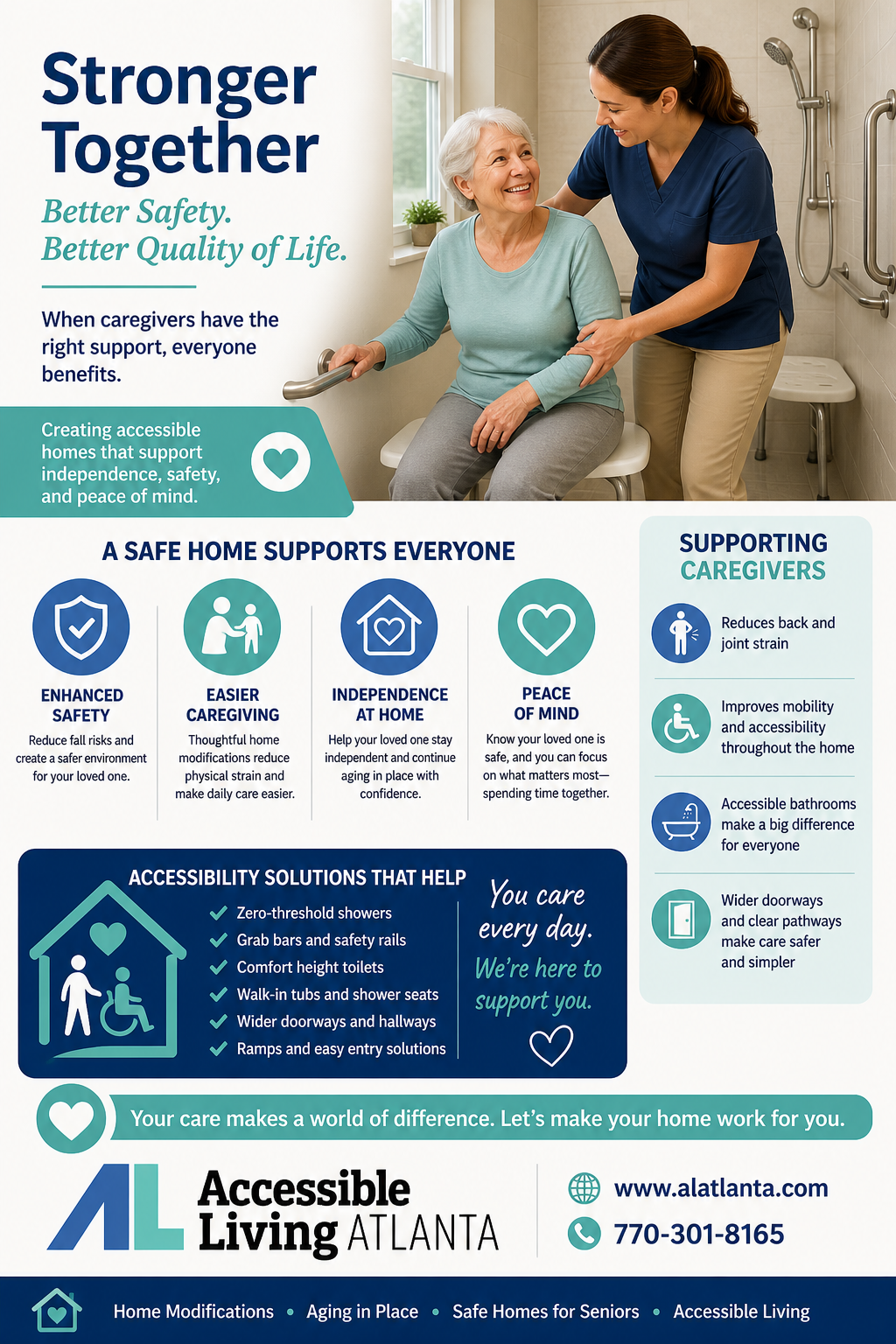
Flyer for Accessible Living Atlanta on home modifications for safe aging, including photos of accessible home features.
March 20, 2026
The word ARCHI comes from the Greek meaning “chief,” “principal,” or “foundational.” It is the root of words like architecture and hierarchy —both of which play an important role in how we think about aging safely and independently.
Three people standing in a bathroom, discussing architectural plans for a home renovation.
March 18, 2026
Over the past several years, I’ve heard the same concern from many aging-in-place professionals. They say something like this: "Everyone says aging in place is a huge opportunity… but I’m not seeing the clients." If you’re feeling that way, you’re not imagining it. The reality is that aging-in-place remodeling is growing rapidly , but the work is not always flowing to the professionals who specialize in home safety assessments. Instead, much of the demand is going directly to contractors and remodelers . Let’s take a closer look at the numbers and the reasons behind this disconnect. The Aging-in-Place Remodeling Market Is Growing First, the data does show strong growth in the remodeling industry. In the United States, homeowners spend hundreds of billions of dollars every year on home improvements . Recent research shows: U.S. home improvement spending reached about $534 billion in 2024 Experts project it will grow to over $680 billion by 2033 Remodeling has also become a much larger part of the housing industry. In 2007, remodeling made up about 33 percent of residential construction spending . Today, that number has grown to about 44 percent . This means homeowners are spending more money upgrading existing homes instead of moving or building new ones. A significant portion of remodeling spending is driven by the needs of older adults, with industry surveys showing that over 70 percent of aging-in-place modification requests come from homeowners age 65 and older. ( NAHB ) The Aging Population Is Driving Home Modifications The reason is simple. Most older adults want to remain in their homes. Research consistently shows that: Nearly 90 percent of adults over age 65 want to age in place About three-quarters of adults over 50 say staying in their home is their goal At the same time, most homes were never designed for aging . Some estimates suggest that only about 10 percent of homes are aging-ready . This creates a large gap between what people want and what their homes can safely support. That gap is driving a growing market for aging-in-place remodeling. Some estimates place the aging-in-place renovation market at over $74 billion today , with projections exceeding $100 billion within the next decade . Remodelers Are Seeing the Demand When researchers ask remodelers about aging-in-place projects, they consistently report growing demand. Surveys show: More than 70 percent of remodelers say requests for aging-in-place features have increased ( eyeonhousing.org ) Over half of remodelers are already completing aging-in-place modification projects ( housingwire.com ) Common projects include: Walk-in or curbless showers Grab bars in bathrooms Ramps and step-free entrances Wider doorways Non-slip flooring Improved lighting These modifications make homes safer and easier for older adults to navigate. So yes, the demand for aging-in-place improvements is real. But here is where the story gets more complicated. Why Contractors Often Get the Work Instead of Assessors Even though aging-in-place professionals specialize in home safety assessments, many homeowners never hire one. Instead, they go directly to contractors. There are several reasons for this. 1. Homeowners Do Not Know Home Safety Assessments Exist Most people simply do not know that aging-in-place assessments are a service. When a homeowner begins searching online, they usually type things like: “Bathroom remodel” “Grab bar installation” “Walk-in shower” “Wheelchair ramp” They rarely search for: “Home safety assessment” “aging-in-place evaluation” Because of this, contractors become the first professionals they find. 2. Contractors Sell a Visible Solution Another reason is psychological. Contractors sell a clear, visible solution . A contractor might say: "We can install a walk-in shower and grab bars." An assessor might say: "We will evaluate your home and provide recommendations." To many homeowners, the first option feels more concrete. They see a product or improvement right away. 3. Insurance Rarely Pays for Assessments Financial factors also play a role. Most aging-in-place assessments must be paid out of pocket . Insurance rarely covers them. However, home modifications are often paid for through: Home equity loans Remodeling budgets Renovation financing Because of this, homeowners sometimes skip the assessment and go directly to the renovation. 4. Contractors Often Do Informal “Assessments” In many cases, contractors end up doing the evaluation themselves. The process often looks like this: A homeowner calls a remodeler The remodeler walks through the home They recommend safety improvements From the homeowner’s perspective, the assessment has already happened. So they never seek a separate professional evaluation. Why This Is a Problem From a clinical perspective, this approach can miss important issues. A proper aging-in-place assessment looks at much more than home design. It should consider: Mobility and balance Vision changes Cognitive function Caregiver needs Future physical decline Daily routines inside the home These factors help ensure that modifications truly support long-term independence. Without this deeper evaluation, homeowners sometimes make renovations that solve today’s problem but not tomorrow’s. The Opportunity for Aging-in-Place Professionals Even though contractors currently receive much of the work, the opportunity for aging-in-place professionals still exists. But the opportunity may depend on working alongside remodelers instead of competing with them . Many successful professionals build partnerships with: Contractors Remodelers Occupational therapists Home care agencies Senior service providers By collaborating, they help ensure that home modifications are based on both safety and function . The Bottom Line The aging-in-place market is real. Demographics, housing trends, and homeowner preferences all point to growing demand for safer homes. However, much of the current demand is flowing through remodeling companies rather than assessment professionals . Understanding this reality can help aging-in-place specialists rethink how they position their services and how they connect with homeowners. Because when safety, accessibility, and independence are done right, aging in place becomes much more than a remodeling project.  It becomes a plan for living well at home.
Infographic showing home accessibility modifications for mobility needs across three stages: early, middle, and late.
March 13, 2026
Serious mobility loss can happen gradually — or instantly. Conditions such as ALS, MS, Muscular Dystrophy, Parkinson’s disease, stroke, and traumatic injuries often change a person’s ability to move safely inside their own home.
More Posts