Staying Connected is a Key to Healthy Aging

May 13, 2024

May is Older Americans Month, first designated as such by President John F. Kennedy more than 60 years ago. It is a time to remind ourselves of the indispensable contributions that our growing 50-plus population has made and continues to make to the progress and vitality of our nation.

The U.S. government made “Powered by Connection” the theme for this year’s Older Americans Month to call attention to the profound link between staying in touch with other people and emotional and mental health.

At AARP, we couldn’t agree more that connection is an essential part of aging well. 


But recent data suggests that America is in danger of becoming a nation of loners. A 2023 advisory report by U.S. Surgeon General Vivek Murthy revealed that America is in the throes of an epidemic of isolation that imperils both the health of our people and the future of our democracy. He cited research showing that roughly one in two adults in America “reported experiencing loneliness.”


Dr. Murthy called social isolation an “underappreciated” public health crisis associated with a 29 percent increased risk of heart disease, a 32 percent increased risk of stroke and a 50 percent increased risk of developing dementia for older adults. He warned that if we continue to “splinter and divide,” our communities will face dire consequences.


AARP has long taken a deep interest in keeping people connected, as part of our core mission to promote happier, healthier lives as we get older.


jo ann jenkins chief executive officer of a a r p

TIMOTHY GREENFIELD-SANDERS

That’s why we seek to empower more older Americans to get up, get out and get active in their communities through fun and fulfillment activities and digital connections.


Technology is an essential part of living, but many older people have a hard time staying on the cutting edge and accessing the fastest internet connections. We set out to change that when Older Adults Technology Services (OATS) became an AARP affiliate. OATS’ mission is to harness the power of technology to change the way we age. Through its flagship program, Senior Planet from AARP, OATS works closely with older adults in community settings to create extraordinary experiences in person and online.


AARP also brings hundreds of thousands of older Americans together through our Virtual Community Center (VCC). The center is a place to find online concerts, cooking classes, yoga sessions and other fun and educational events to share with like-minded people. Since its inception during the pandemic, the VCC has attracted more than 5 million unique visitors 50 and older. 


Our bodies, minds and communities are only as strong as the ties that bind them.


Connecting with others in your community, online or in person, is a great way to prevent loneliness, stay healthy, promote social cohesion and bring joy to yourself and others. Check out what AARP offers to help you achieve those connections.


#homeaccessibility #homemodification #homehealthcare #aginginplace #aginggracefully #caregivers #disability #disabilityawareness #wheelchairuser #wheelchairaccessible #spinalcordinjury #physicallychallenged #safetyathome #elderlycare #graytsunami #healthylifestyle #accessiblematters #userfriendlyhome
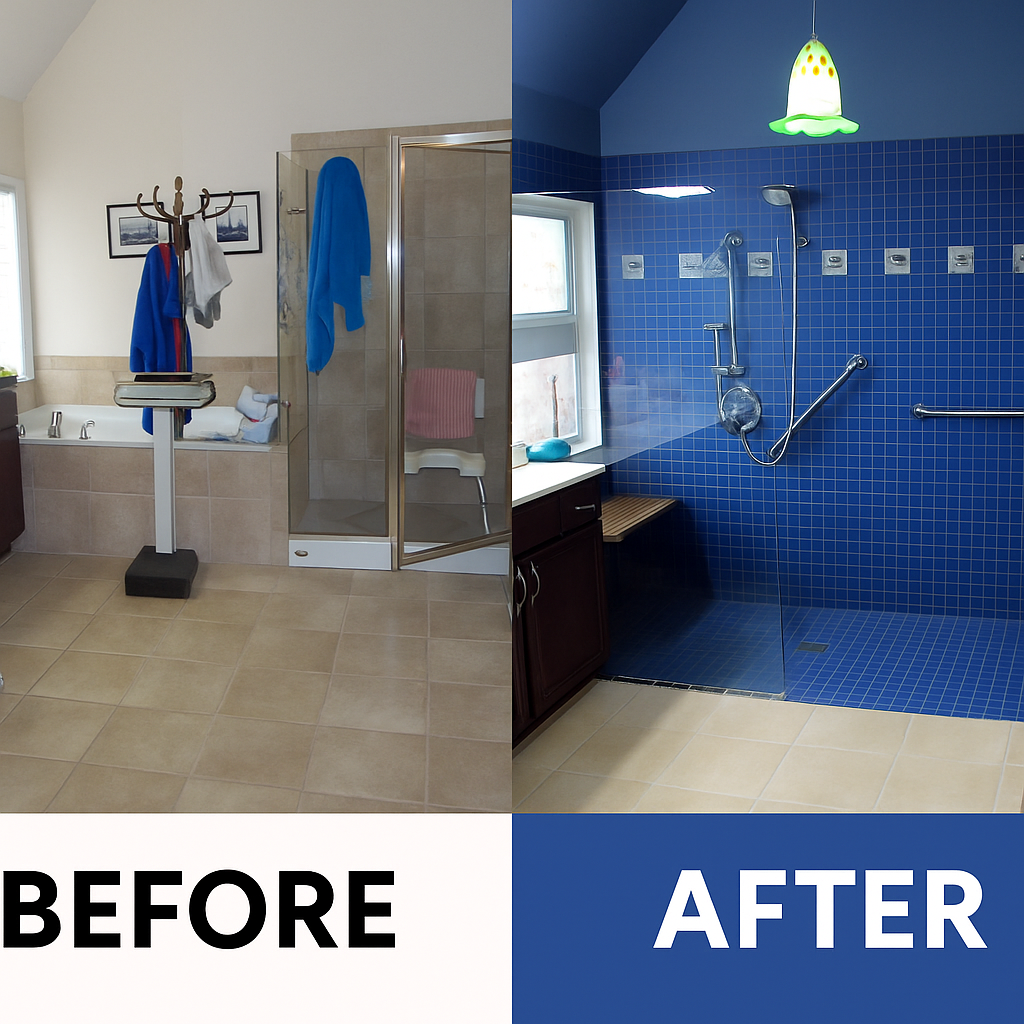
Accessible bathroom shower before-and-after: beige room converted to blue-tiled roll-in shower with grab bars.
April 29, 2026
It only takes one moment. A step into a shower. A loss of balance. And suddenly, everything changes. We recently worked with a client in Marietta who experienced a fall stepping over the threshold of her walk-in shower. There were no grab bars—nothing to steady herself. She broke her hip. After surgery and several weeks in rehab, the question became: “How do we make sure this doesn’t happen again?” Before she returned home, we were able to make several important home modifications to improve home accessibility and create a safer environment: • A zero-threshold shower for easy, safe entry • Properly placed grab bars for stability • A handheld shower and built-in shower seat • A comfort height toilet with additional grab bars • A widened doorway for better wheelchair access • A portable ramp in the garage for safe entry While she may eventually transition from a wheelchair to a walker, her home is now prepared to support her every step of the way. This is what aging in place should look like. Creating safe homes for seniors and individuals who are physically challenged isn’t just about construction— It’s about restoring confidence, safety, and independence. And moments like this remind us why this work truly matters.
April 23, 2026
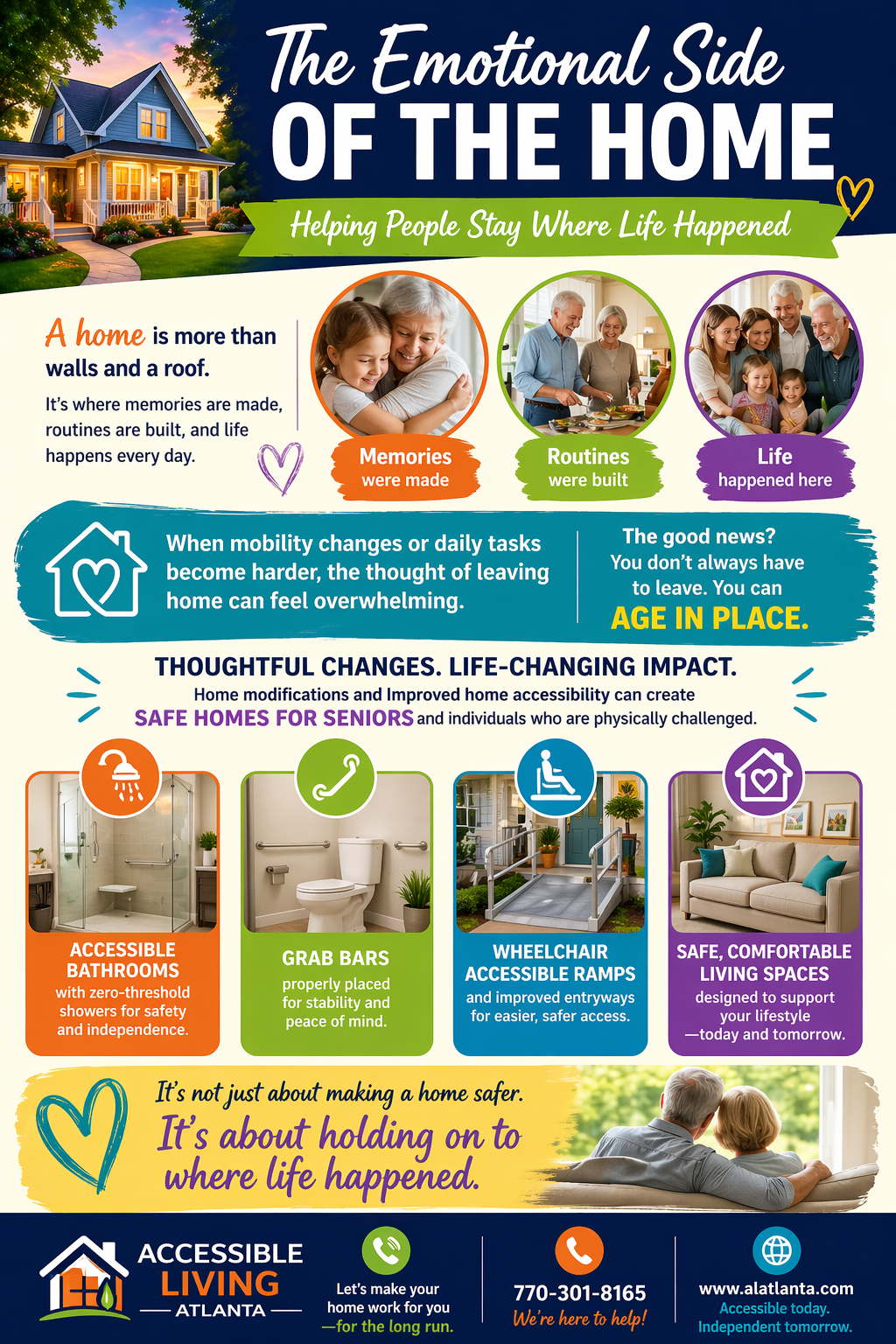
A home is more than a structure—it’s where life happened. Where routines were built. Where memories were made. Where comfort became familiar over time. That’s why the conversation around aging in place is not just about safety… It’s about connection. For many seniors and individuals who are physically challenged , the idea of leaving home isn’t just a practical decision—it’s an emotional one. I’ve seen families face this moment. Trying to balance safety with familiarity. Independence with peace of mind. The good news is—there’s another way to look at it. Through thoughtful home modification and improved home accessibility , it’s often possible to create safe homes for seniors without losing what makes a home feel like home. Features like: • Accessible bathrooms with zero-threshold showers • Properly placed grab bars • Wheelchair accessible ramps and improved entryways These changes aren’t about altering the home—they’re about supporting the people who live in it. Because sometimes, the goal isn’t just to make a home safer…  It’s to help someone continue aging in place — right where life happened.
Infographic titled
April 8, 2026
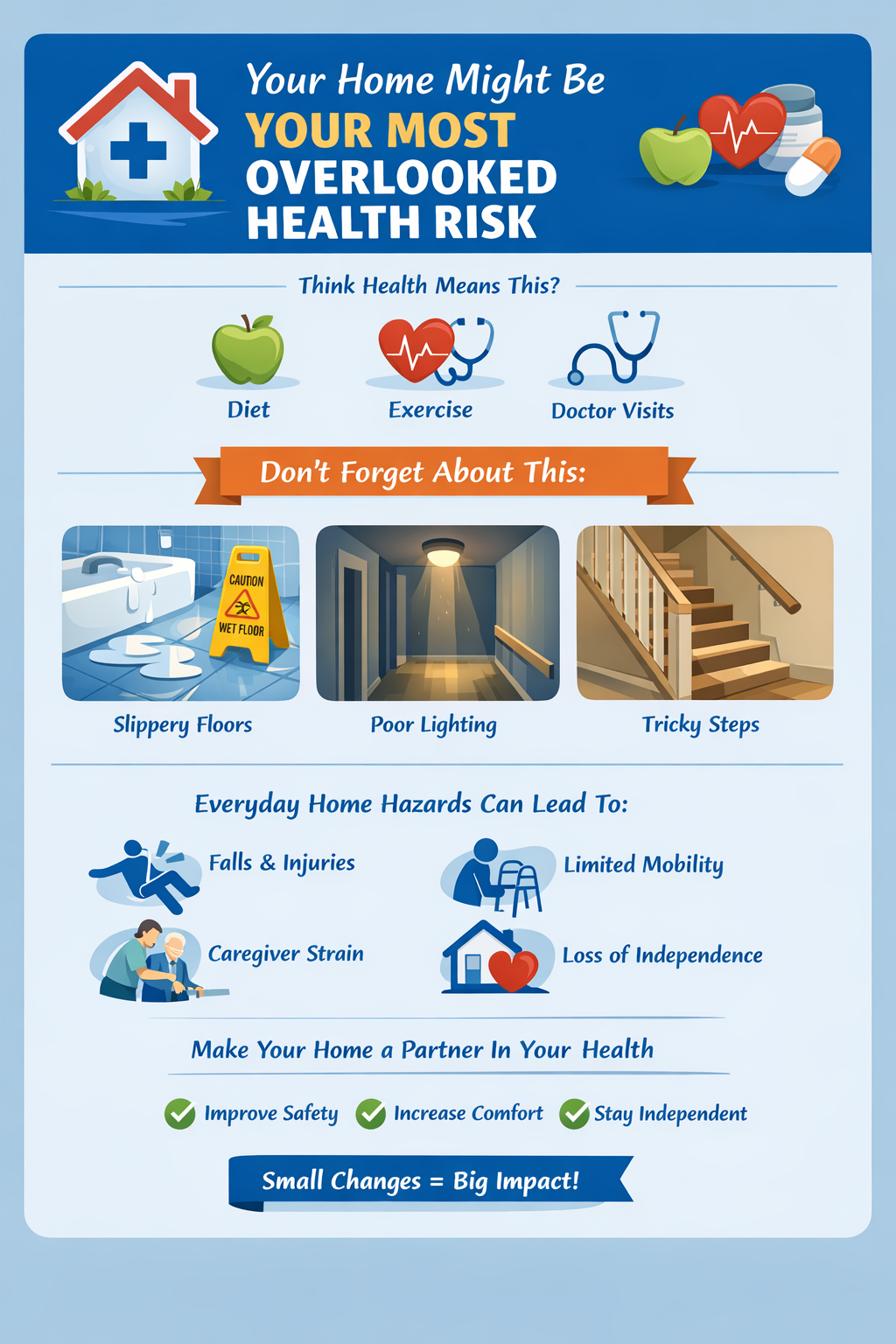
Most people think of their health in terms of doctor visits, medications, diet, and exercise. But there’s one critical factor that is often overlooked… The home environment. Over the years, we’ve seen a consistent pattern: Health issues are not always caused by illness alone—they are often made worse by the home itself. A small step into a shower becomes a fall risk Poor lighting increases instability Narrow doorways limit mobility Everyday tasks become physically demanding What starts as a minor inconvenience can quickly become a serious safety concern.  The reality is this: A home that is not designed to support you can quietly work against your health every single day. On the other hand, a properly designed, accessible home: Reduces fall risks Supports mobility and independence Eases the burden on caregivers Encourages confidence in daily living This isn’t about major renovations in every case. Sometimes, small, thoughtful changes can make a meaningful difference. As more individuals choose to remain at home longer, it’s time to expand the conversation: 👉 Health isn’t just managed in hospitals—it’s lived at home.
More Posts