Nearly 1 in 4 Americans Say the U.S. Health Care System Is in Crisis — and the Home Is Becoming a Safer Haven

December 17, 2025

Nearly one-quarter of Americans say the U.S. health care system is in a state of crisis, according to a recent Gallup poll, with high costs cited as the most urgent national health concern. The perception spans party lines, with majorities of Democrats and Republicans agreeing the system has serious problems.


While many Americans technically have health insurance, affordability remains a major barrier. Rising premiums, deductibles, and out-of-pocket expenses are forcing people to delay or avoid care, increasing the likelihood that manageable conditions turn into serious medical emergencies. For many families, a single fall, injury, or unexpected illness could result in overwhelming medical bills.


As concerns about cost and access continue to grow, more Americans are looking for ways to reduce health risks before medical intervention is required. One increasingly important solution is creating a safer home environment.


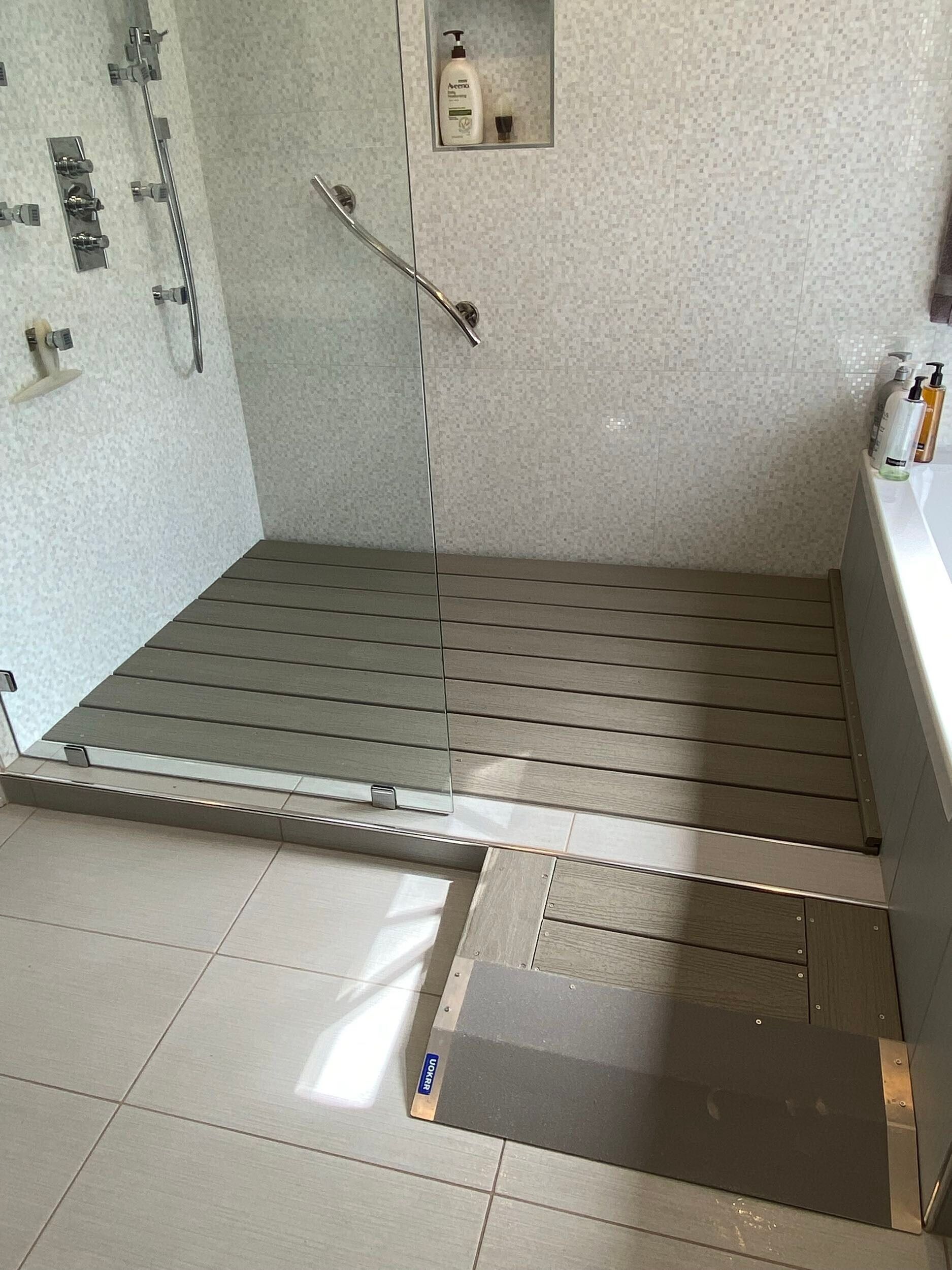
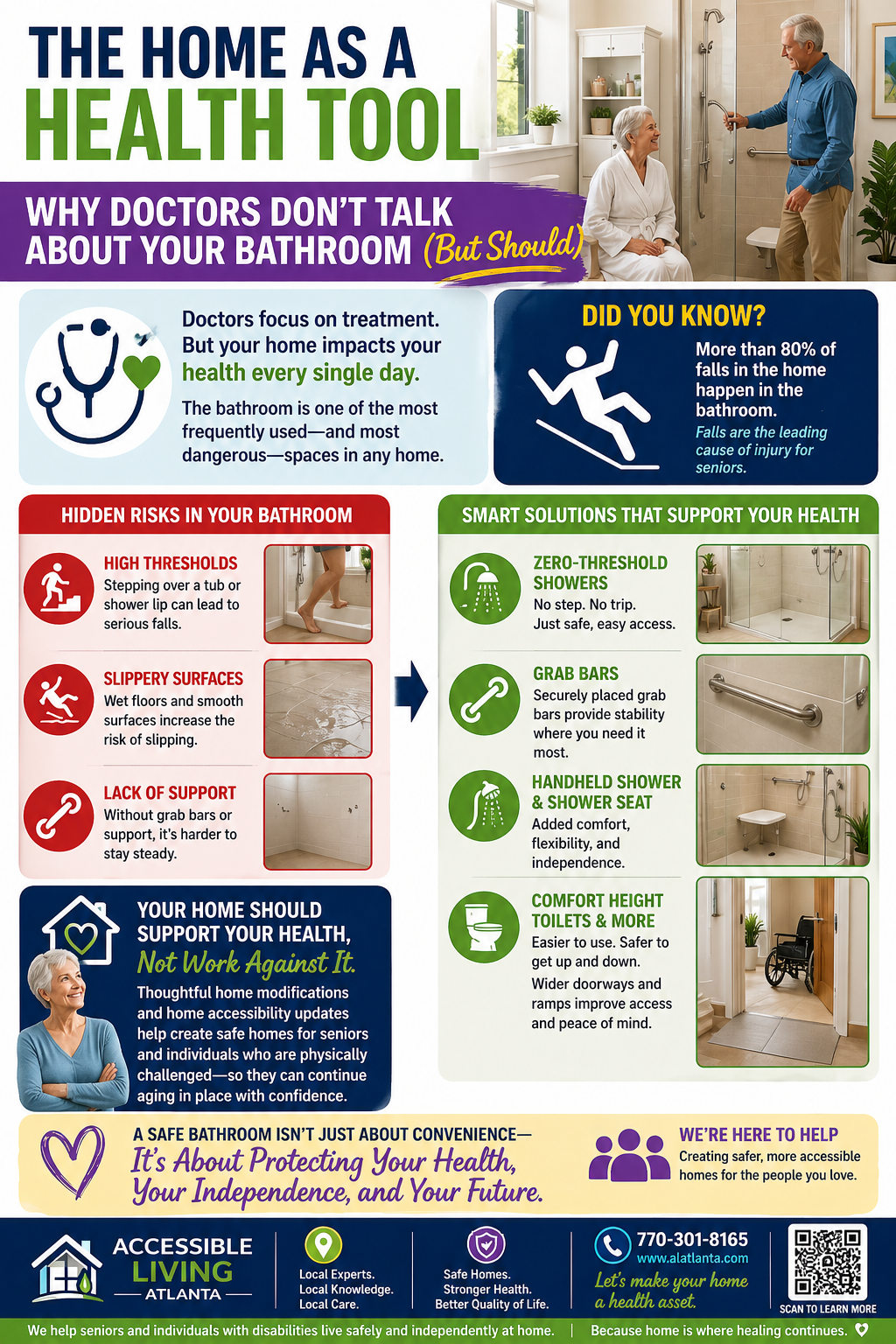
Home modifications can reduce health-related risks by helping prevent falls, injuries, and accidents—some of the leading causes of emergency room visits among seniors and individuals with mobility challenges. These preventive measures often cost far less than hospitalization, rehabilitation, or long-term care.


Simple improvements such as zero-threshold showers, grab bars, wider doorways, improved lighting, and safer entrances can make everyday activities safer and more manageable. These changes allow individuals to age in place, maintain independence, and rely less on an already strained and expensive health care system.


In a time when Americans increasingly view health care as costly and uncertain, the home is emerging as a critical part of the solution—offering safety, independence, dignity, and peace of mind when it matters most.
Caregiver feeds a person in a wheelchair. Text: Caregiver Spotlight. Blue background.
December 11, 2025
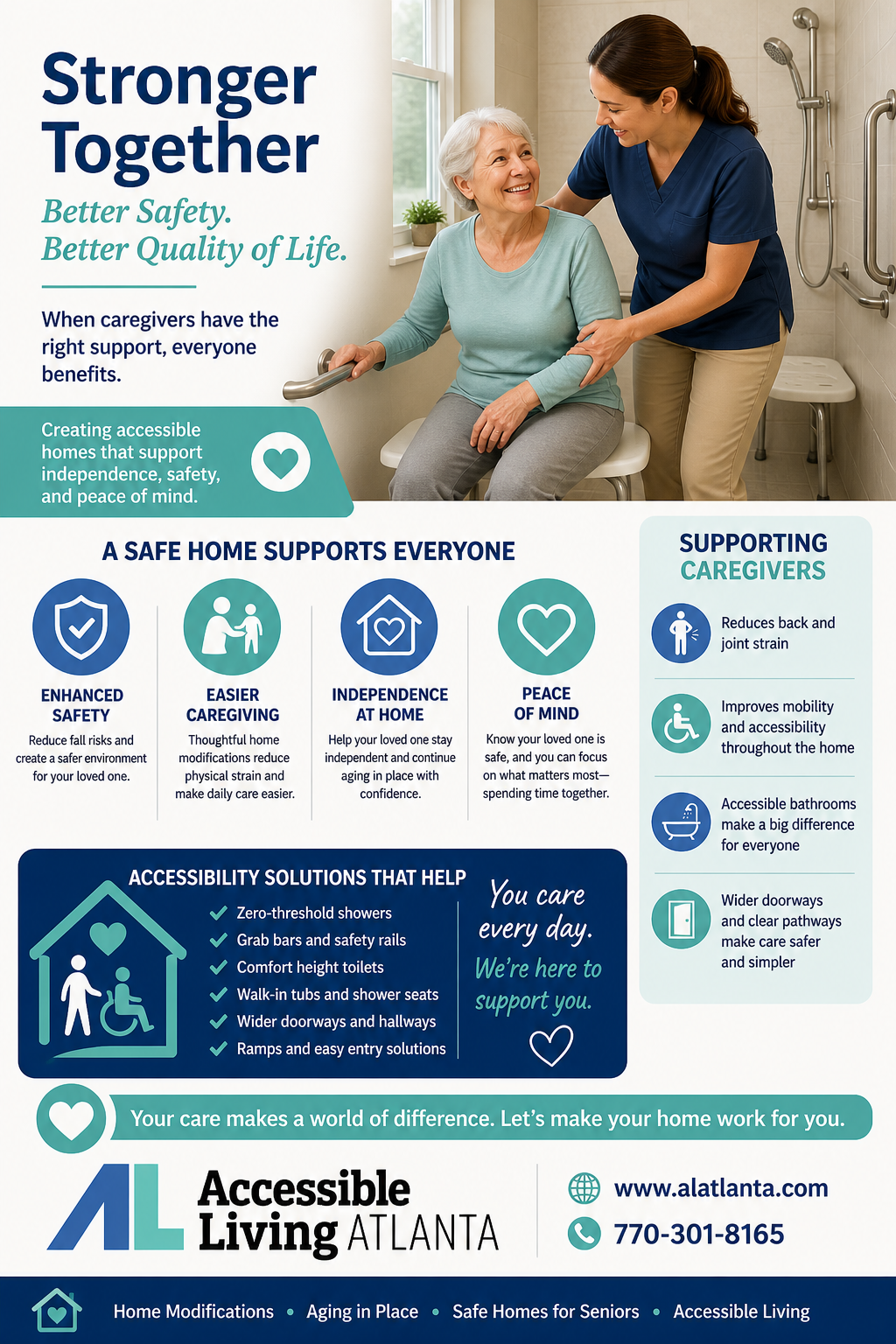
Caregivers play a crucial role in helping seniors and individuals with mobility challenges remain safe and independent at home. And while home modifications benefit the person living there, they also make life safer and less stressful for caregivers. Thoughtful accessibility features — wider doorways, zero-threshold showers, ramps, grab bars, non-slip flooring, and even smart-home tools — lighten the physical and emotional load placed on caregivers every day. At Accessible Living Atlanta , we see firsthand how the right modifications: 🔹 Reduce lifting and strain for caregivers 🔹 Improve safety for everyone in the home 🔹 Support independence and dignity for loved ones 🔹 Create smoother daily routines for families A safer home doesn’t just empower the individual — it empowers the entire care network that supports them. 👉 We’re proud to partner with caregivers, families, and healthcare professionals to make aging in place possible.
Infographic on smart home devices: Voice assistants, motion lighting, video doorbells, smart locks. Supports independence.
December 9, 2025
Smart home technology is transforming how seniors and individuals with mobility challenges live safely and independently. When paired with professional home modifications , these tools create a powerful system for aging in place with confidence.  Key examples include: 🔹 Voice assistants that control lights, thermostats, and devices hands-free 🔹 Motion-sensor lighting that automatically illuminates halls and bathrooms to prevent falls 🔹 Video doorbells & smart locks that enhance safety and allow remote access for caregivers These technologies reduce reliance on others, improve daily safety, and provide peace of mind for families and caregivers. At Accessible Living Atlanta , we design safe, accessible, and user-friendly homes that integrate both traditional accessibility solutions and modern smart technology . #TechnologyAndAccessibility #SmartHome #AgingInPlace #HomeModifications #AccessibleLiving #SafeHomesForSeniors #MobilitySolutions
Man in wheelchair exiting building via a ramp. He is wearing a dark shirt and jeans. Bright building with landscaping in the background.
December 8, 2025
When someone is injured on the job, the focus is often on medical recovery — but what happens when returning home brings new challenges? For many, workers’ compensation benefits can help cover essential home modifications that restore safety, accessibility, and independence. These upgrades may include: 🔹 Zero-threshold showers for safe, independent bathing. 🔹 Ramps or platform lifts for easy access to entries and exits. 🔹 Wider doorways and open floor plans for wheelchair navigation. 🔹 Grab bars, handrails, and non-slip flooring for fall prevention. A work-related injury can change how someone moves through their home — but with the right support, it doesn’t have to limit how they live. At Accessible Living Atlanta , we’ve helped many families work with insurance and workers’ comp programs to create safe, user-friendly homes that promote healing, comfort, and confidence — inside and out. 👉 If you know someone adjusting to life after an injury, we can help them explore how workers’ compensation may fund the modifications they need.
More Posts