I want to avoid the ‘aging mistakes’ my parents made. I’ve got work to do.

Steven Petrow • March 22, 2026

Twenty years ago, I started a list of what I considered “stupid things” that people do as they age. Now, I’m seeing my life, and my list, in a different light.


Wow, time flies. Nearly 20 years ago, soon after my 50th birthday, I started making a list of what I considered mistakes my parents (and many of their generation) had made as they aged — and that I swore I would not repeat. Some of the items were silly (“I won’t color my hair anymore”), but most of them had substance (“I won’t limit myself to friends my own age” and “I won’t worry about what I can’t control”), and a few took the needs of family into account (“I won’t keep driving when I become a threat to others” and “I won’t deny the fact that I need hearing aids”).


Now, in the penumbra preceding 70, I’m seeing my life – and my list – in a new light.

I wrote about the list for the first time in 2017, after my parents had died. Born of the frustration I felt witnessing the price Mom and Dad paid for their stubbornness, my tally had reached more than 100 items, and I hoped to hold myself accountable by going public with my promises.
Nurse helping senior woman in living room with text about accessible in-home care from Accessible Living Atlanta
May 8, 2026
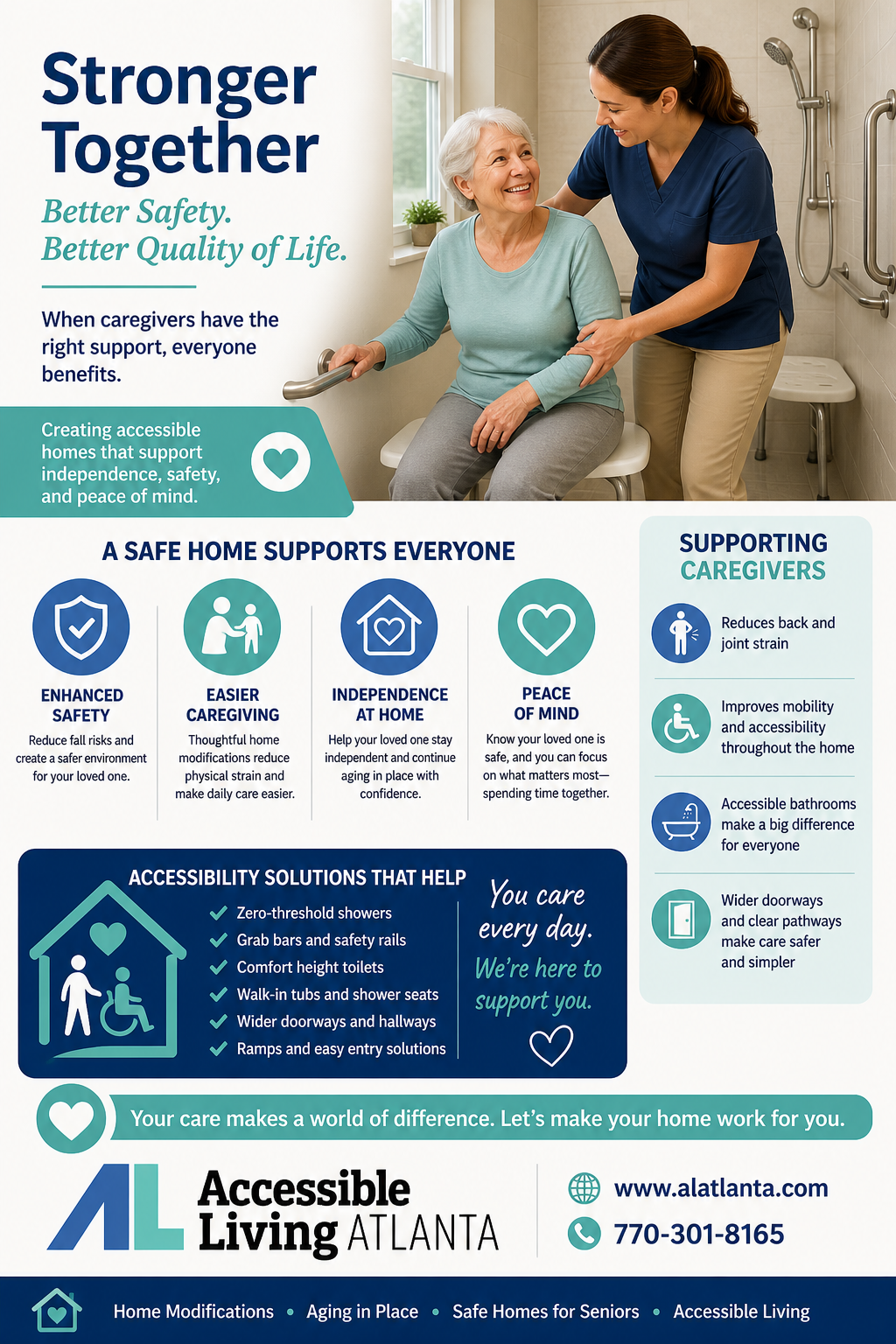
There’s a group of people who don’t always get recognized… The caregivers. They step in quietly. They adjust their routines. They do what needs to be done—every single day. Helping someone out of bed. Assisting in the bathroom. Navigating spaces that were never designed for two people. Over time, the physical toll adds up. Sore backs. Fatigue. The constant worry of doing something the wrong way. And here’s something we’ve seen time and time again: It’s not a lack of strength… it’s the environment. Most homes were never designed to support caregiving. That’s where home modification and home accessibility make a meaningful difference. Simple changes can help: • Reduce physical strain on caregivers • Improve safety for both individuals • Create more functional, supportive spaces Features like: ✔ Accessible bathrooms with zero-threshold showers ✔ Properly placed grab bars ✔ Wider doorways and better layout flow These changes help create safe homes for seniors and individuals who are physically challenged—while also protecting the caregiver.  Because aging in place should support everyone in the home… not just the person receiving care.
Accessible shower with fold-down seat, grab bars, and tiled floor in a bathroom.
May 6, 2026
Most people don’t plan for change in their home.
Health poster on bathroom safety with tips, icons, and photos for preventing falls and injuries
May 5, 2026
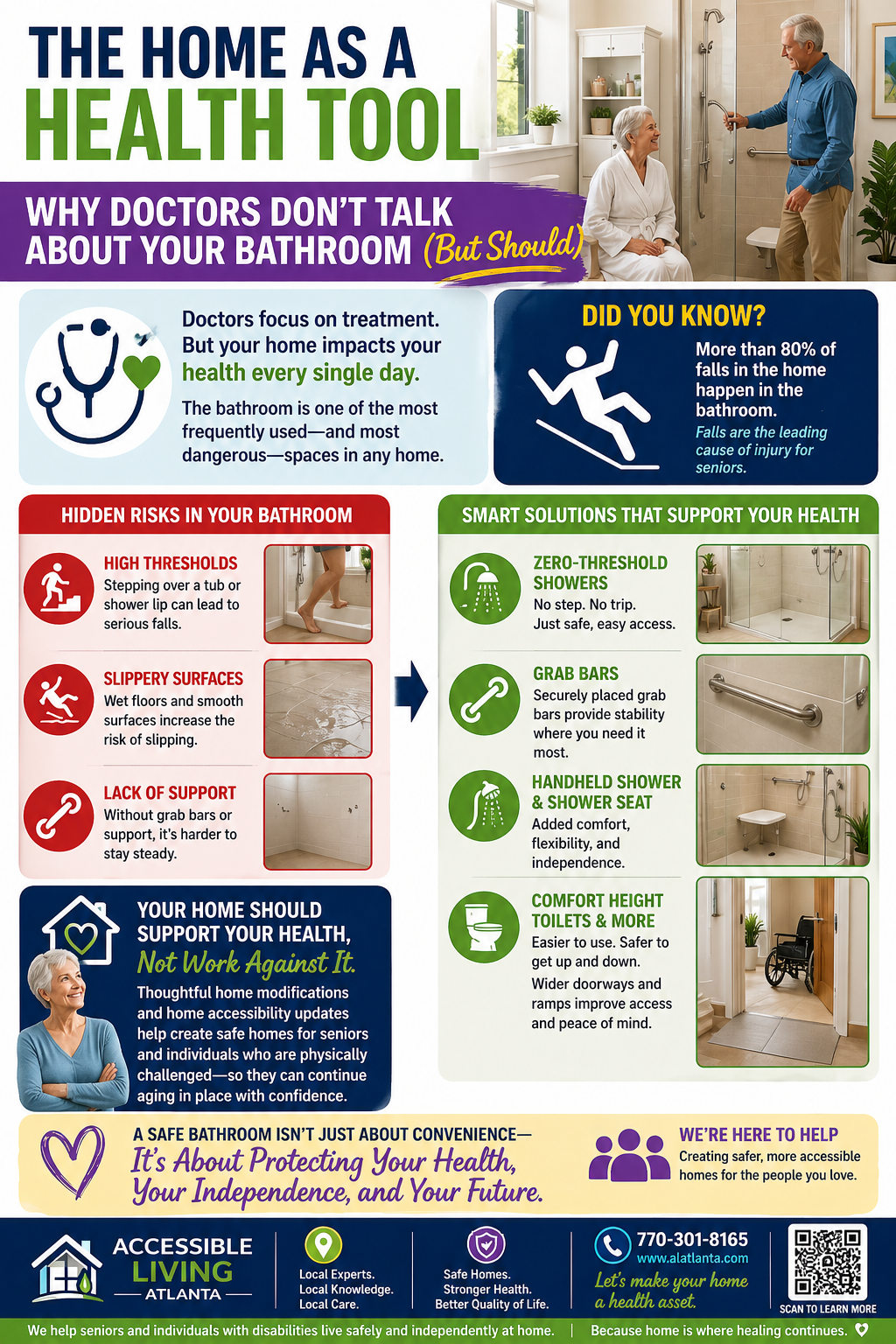
When we think about health, we usually think about doctors, medications, and treatment plans. But there’s one place that impacts health every single day… The bathroom. It’s one of the most frequently used spaces in any home— and one of the most dangerous. Slippery surfaces. High step-over tubs. Lack of properly placed grab bars . Yet, it’s rarely part of the conversation. Doctors focus on recovery. But what happens after someone goes home? That’s where home modification and home accessibility play a critical role. Simple changes can make a meaningful difference: Zero-threshold showers to eliminate trip hazards Properly installed grab bars for stability Accessible bathrooms designed for safety and ease of use These are not luxury upgrades. They are essential steps in creating safe homes for seniors and individuals who are physically challenged . Because aging in place successfully isn’t just about health care— It’s about the environment that supports it every day.
More Posts