
How Can an Overhead Ceiling Lift be Beneficial to Someone That's Wheelchair Bound?
Dennis Lippy • January 22, 2024
An overhead ceiling lift can offer several benefits for someone who is wheelchair-bound. Here are some key advantages:
- Improved Mobility and Independence: Overhead lifts provide a safe and efficient way for individuals to transfer from their wheelchair to other surfaces, such as beds, chairs, or bath areas. This promotes greater independence and mobility.
- Reduced Physical Strain: Using an overhead lift reduces the physical strain on both the caregiver and the person with limited mobility during transfers. This is particularly important for individuals with conditions that affect strength or stability.
- Enhanced Safety: Overhead lifts are designed with safety features, such as emergency stop buttons and secure harness systems, reducing the risk of accidents or injuries during transfers. This is crucial for maintaining a safe environment.
- Comfort and Dignity: The smooth and controlled movement of an overhead lift ensures a comfortable and dignified transfer experience. It minimizes the discomfort that may be associated with manual transfers.
- Space Efficiency: Overhead lifts take up minimal floor space compared to floor-based lifts or other transfer aids. This is advantageous in smaller living spaces, allowing for more flexibility in room design and layout.
- Versatility: Overhead lifts can be installed in various areas of a home, including bedrooms, bathrooms, and living rooms. This versatility makes it easier to facilitate transfers across different environments within the home.
- Time Efficiency: Using an overhead lift can significantly reduce the time required for transfers. This efficiency can be particularly beneficial in situations where quick and frequent transfers are necessary.
- Adaptability: Overhead lifts can be adapted to suit the specific needs of the individual, including height adjustments and customized sling options. This ensures a personalized and comfortable transfer experience.
It's important to note that the suitability of an overhead ceiling lift depends on individual needs, the layout of the living space, and other factors. Consulting with healthcare professionals and occupational therapists can help determine the most appropriate assistive devices for a person with limited mobility.
#homeaccessibility #homemodification #homehealthcare #aginginplace #aginggracefully #caregivers #disability #disabilityawareness #wheelchairuser #wheelchairaccessible #spinalcordinjury #physicallychallenged #safetyathome #elderlycare #graytsunami #healthylifestyle #accessiblematters #userfriendlyhome
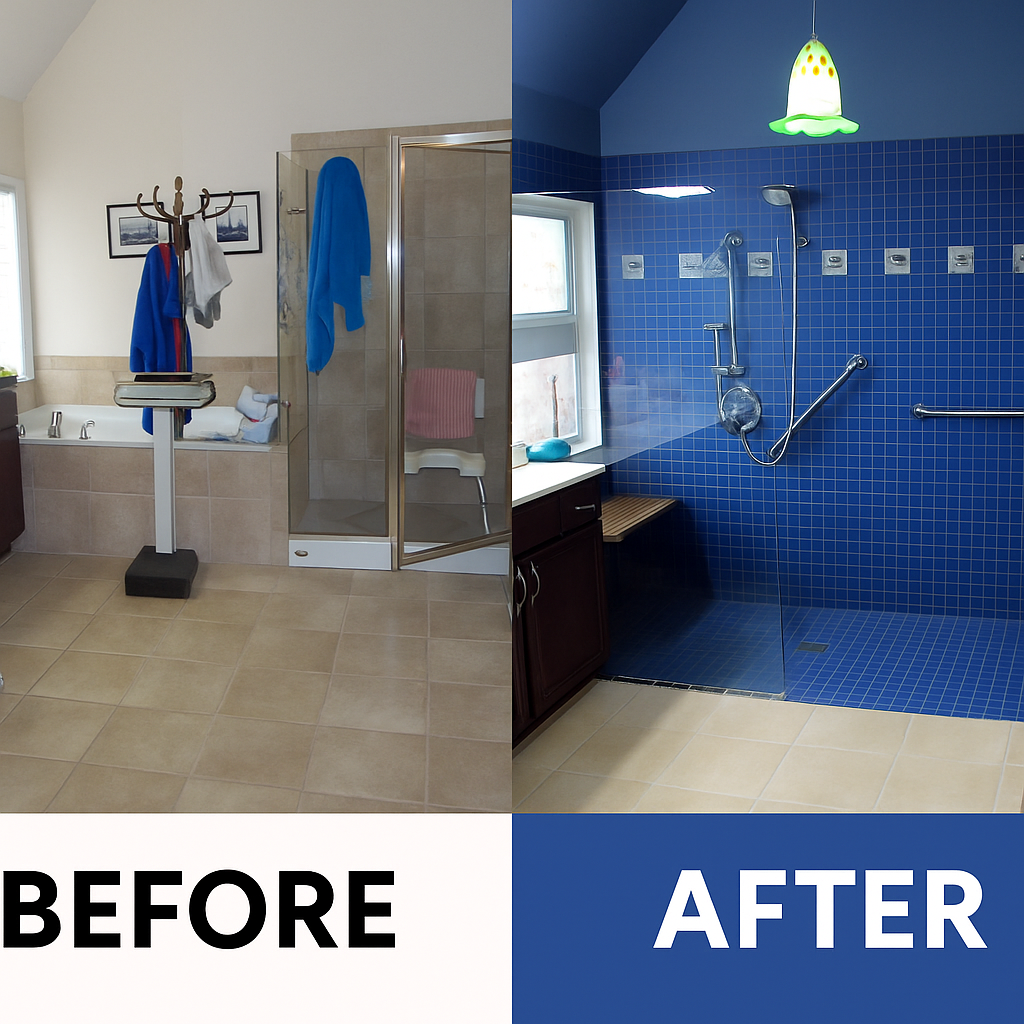
It only takes one moment. A step into a shower. A loss of balance. And suddenly, everything changes. We recently worked with a client in Marietta who experienced a fall stepping over the threshold of her walk-in shower. There were no grab bars—nothing to steady herself. She broke her hip. After surgery and several weeks in rehab, the question became: “How do we make sure this doesn’t happen again?” Before she returned home, we were able to make several important home modifications to improve home accessibility and create a safer environment: • A zero-threshold shower for easy, safe entry • Properly placed grab bars for stability • A handheld shower and built-in shower seat • A comfort height toilet with additional grab bars • A widened doorway for better wheelchair access • A portable ramp in the garage for safe entry While she may eventually transition from a wheelchair to a walker, her home is now prepared to support her every step of the way. This is what aging in place should look like. Creating safe homes for seniors and individuals who are physically challenged isn’t just about construction— It’s about restoring confidence, safety, and independence. And moments like this remind us why this work truly matters.
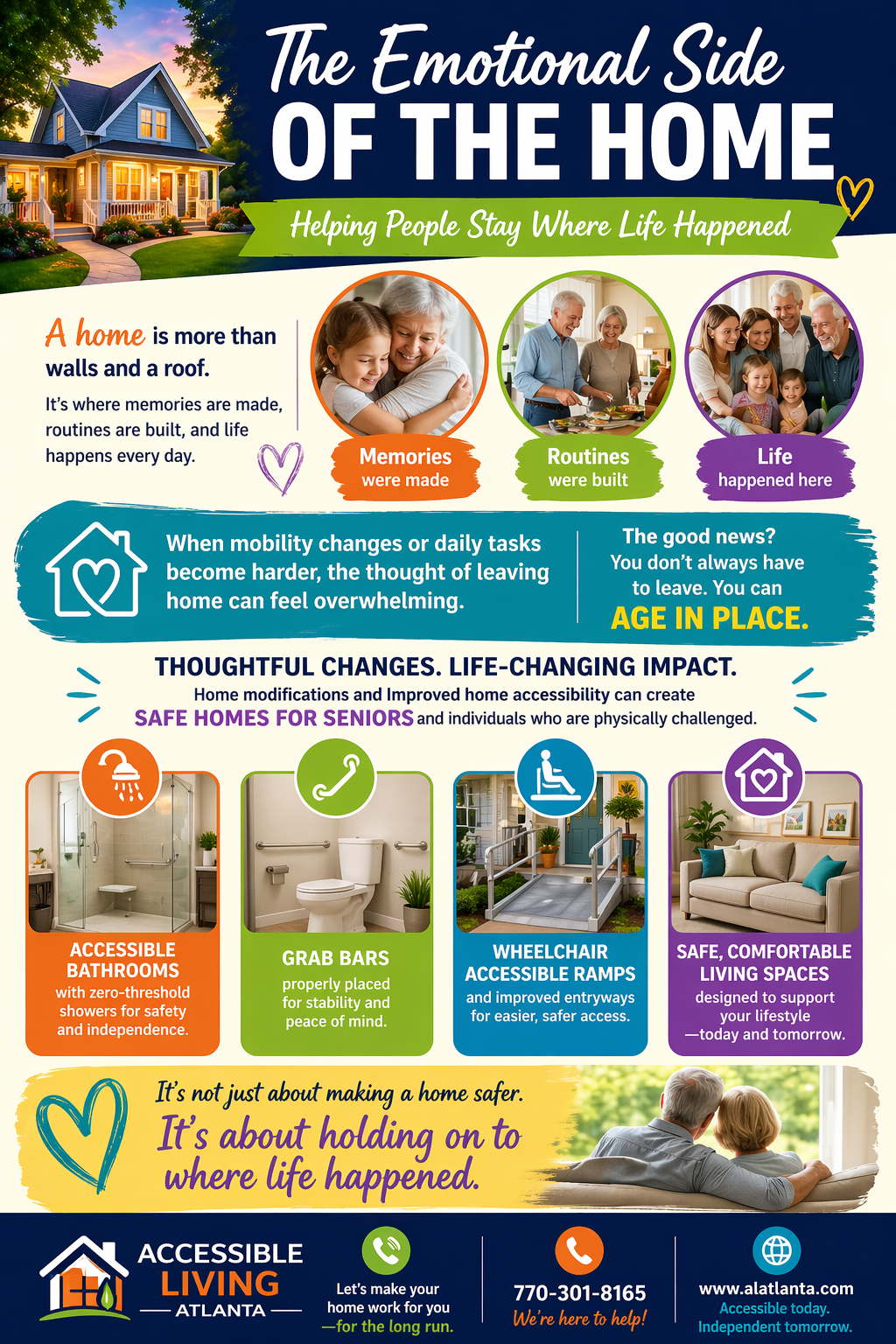
A home is more than a structure—it’s where life happened. Where routines were built. Where memories were made. Where comfort became familiar over time. That’s why the conversation around aging in place is not just about safety… It’s about connection. For many seniors and individuals who are physically challenged , the idea of leaving home isn’t just a practical decision—it’s an emotional one. I’ve seen families face this moment. Trying to balance safety with familiarity. Independence with peace of mind. The good news is—there’s another way to look at it. Through thoughtful home modification and improved home accessibility , it’s often possible to create safe homes for seniors without losing what makes a home feel like home. Features like: • Accessible bathrooms with zero-threshold showers • Properly placed grab bars • Wheelchair accessible ramps and improved entryways These changes aren’t about altering the home—they’re about supporting the people who live in it. Because sometimes, the goal isn’t just to make a home safer… It’s to help someone continue aging in place — right where life happened.
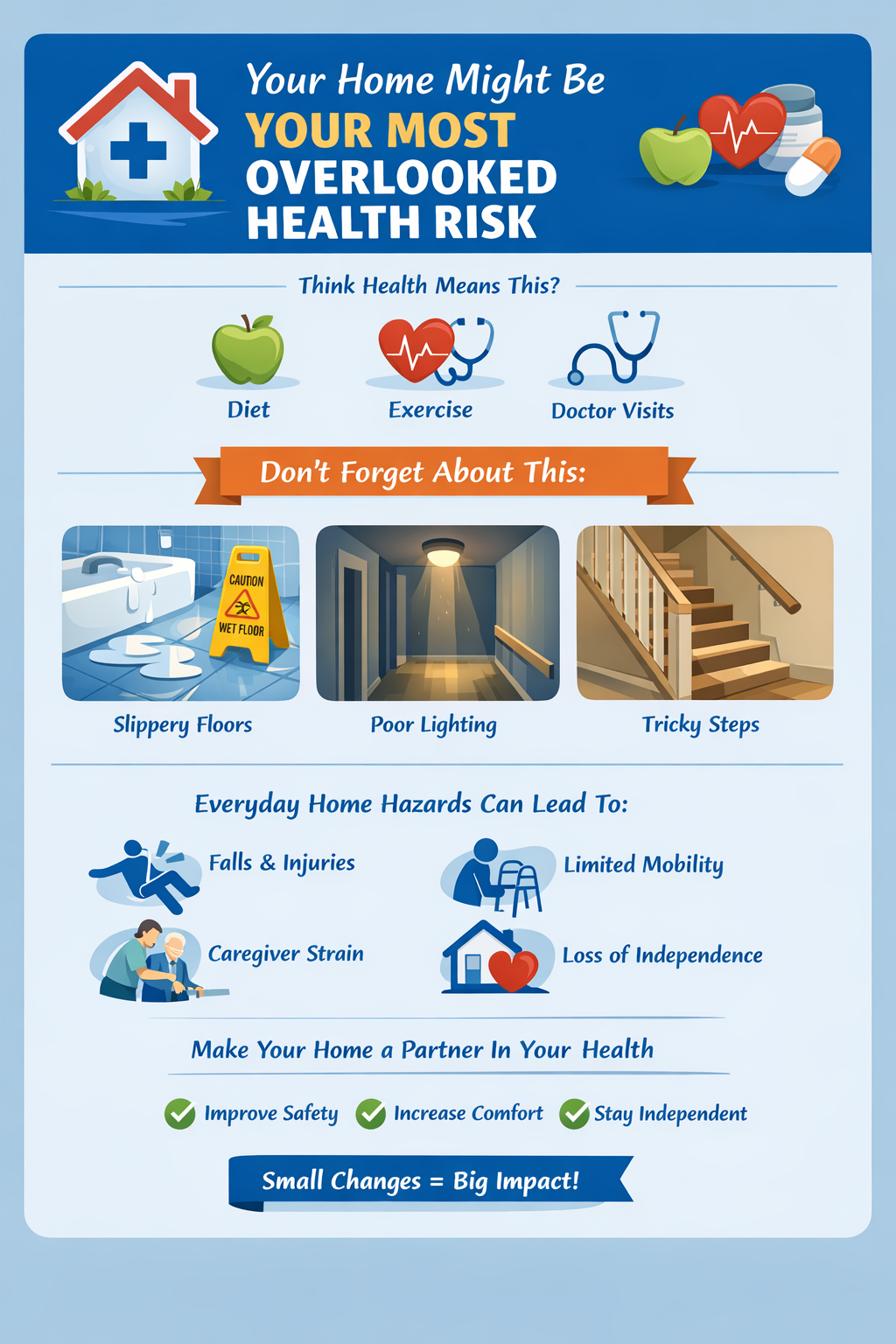
Most people think of their health in terms of doctor visits, medications, diet, and exercise. But there’s one critical factor that is often overlooked… The home environment. Over the years, we’ve seen a consistent pattern: Health issues are not always caused by illness alone—they are often made worse by the home itself. A small step into a shower becomes a fall risk Poor lighting increases instability Narrow doorways limit mobility Everyday tasks become physically demanding What starts as a minor inconvenience can quickly become a serious safety concern. The reality is this: A home that is not designed to support you can quietly work against your health every single day. On the other hand, a properly designed, accessible home: Reduces fall risks Supports mobility and independence Eases the burden on caregivers Encourages confidence in daily living This isn’t about major renovations in every case. Sometimes, small, thoughtful changes can make a meaningful difference. As more individuals choose to remain at home longer, it’s time to expand the conversation: 👉 Health isn’t just managed in hospitals—it’s lived at home.