Creating Inclusive Homes: The Importance of Home Modifications for Seniors and Physically Challenged Individuals
August 23, 2025

As our population ages and awareness of accessibility grows, more families are looking for ways to make their homes safer, more comfortable, and more inclusive. For seniors and individuals with physical challenges, even the smallest obstacle—like a single step at the front door or a narrow bathroom doorway—can become a major barrier to independence.

That’s where home modifications come in. These changes, which can be as simple as adding grab bars or as comprehensive as redesigning entire spaces, transform houses into homes that support both safety and dignity.

In this article, we’ll explore why home modifications are so important, how they improve daily life, and how Accessible Living Atlanta has been helping families create safe, functional, and beautiful homes for over 20 years.

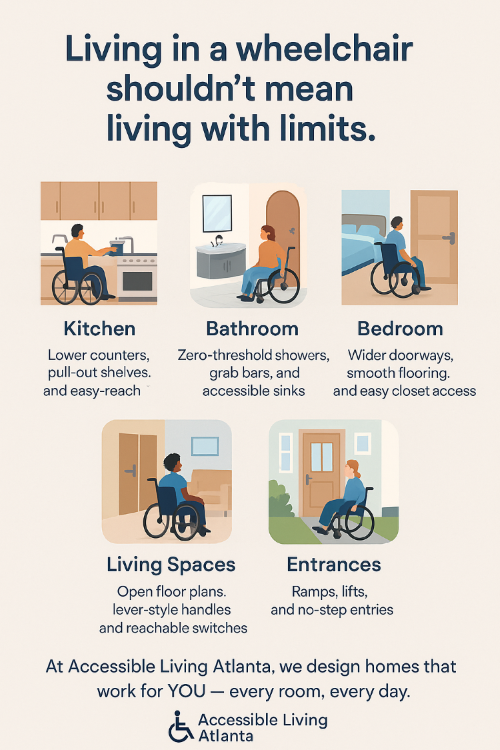
Image promoting wheelchair-accessible homes, showing kitchen, bathroom, bedroom, living spaces, and entrances; text highlights modifications for accessibility.

For individuals who use a wheelchair, the home should be a place of comfort, independence, and safety. Yet many houses are built with narrow doorways, high counters, steep steps, and other barriers that make daily life more challenging than it needs to be. At Accessible Living Atlanta, we believe those barriers can — and should — be removed.

We’ve spent over 20 years working with clients in the Atlanta area to transform their homes into spaces that work with them, not against them. The right modifications don’t just make a home more functional — they restore independence, reduce risk of injury, and give peace of mind to both the homeowner and their loved ones.

Below, we’ll explore how thoughtful, professionally designed modifications can make every room in a home wheelchair-friendly.

Enhancing Independence

Independence is one of the most valued aspects of life, especially as we age. Home modifications help preserve that freedom.

  • Ramps and lifts eliminate barriers at entrances, allowing wheelchair users or those with walkers to come and go freely.
  • Barrier-free showers with handheld showerheads and built-in seating make bathing a safe and private activity.
  • Wider doorways give mobility devices easy access to every room, so no part of the home feels “off limits.”

For many, these adjustments mean the difference between relying on constant assistance and enjoying everyday routines independently.

Promoting Safety

Falls are one of the leading causes of injury for older adults. Safety-focused home modifications address these risks head-on.

  • Grab bars in bathrooms and hallways provide stability where it’s needed most.
  • Non-slip flooring reduces the chance of slips in high-risk areas like bathrooms and kitchens.
  • Good lighting ensures stairs, hallways, and outdoor paths are easy to navigate.

These updates don’t just reduce accidents—they also provide peace of mind for family members who may worry about their loved one’s safety at home.


Supporting Aging in Place

Many seniors wish to remain in their own homes as they age, a concept known as “aging in place.” But doing so requires a home that can adapt to changing physical needs.

Strategic modifications—such as comfort-height toiletszero-threshold showers, and accessible kitchens—make it possible to live safely and comfortably in a familiar environment for years to come.


Improving Caregiver Support

Home modifications also benefit caregivers.

  • ceiling lift reduces the physical strain of transfers from bed to wheelchair.
  • An open floor plan makes it easier to maneuver equipment.
  • Accessible bathrooms allow for more independence, easing stress for both the caregiver and the individual receiving care.

These thoughtful updates foster healthier, more sustainable caregiving relationships.


Boosting Mental and Emotional Well-Being

When people feel safe and independent in their homes, their emotional health improves too. Modifications help reduce stress, anxiety, and frustration, and create an environment where individuals feel:

  • Confident in moving about their home.
  • Connected to family and community.
  • Positive about their ability to remain active and engaged.


Increasing Property Value

Accessible homes often appeal to a broader range of buyers. Features like ramps, widened hallways, and barrier-free bathrooms make properties more marketable.

Additionally, grants, veterans’ benefits, and insurance options may help offset the cost of modifications, making them a smart financial choice as well as a lifestyle improvement.


Customized Solutions for Every Home

No two people—or homes—are the same. That’s why modifications should always be tailored. An occupational therapist and accessibility professional can evaluate the home and recommend the best solutions, ensuring modifications are both functional and aesthetically pleasing.

Accessible Living Atlanta: Your Partner in Creating Inclusive Homes

For over 20 years, Accessible Living Atlanta has been helping families across the metro Atlanta area create homes that are not only functional but also welcoming and beautiful.

Our team specializes in:

  • Bathroom Modifications: Zero-threshold showers, grab bars, comfort-height toilets, and slip-resistant flooring.
  • Entry & Mobility Solutions: Wheelchair ramps, vertical platform lifts, widened doorways, and barrier-free entryways.
  • Kitchen Adaptations: Lowered cabinets and counters, accessible appliances, and layouts designed for seated use.
  • Whole-Home Accessibility: From hallways to bedrooms, we ensure every part of the home supports independence and safety.

What sets us apart is our experience and certifications. Co-owner Dennis Lippy, with over 40 years in construction and more than 20 years focused on accessibility, is CAPS (Certified Aging-in-Place Specialist) and CEAC (Certified Environmental Access Consultant) certified. Co-owner Trent Zumbrun brings deep expertise as a fourth-generation construction professional and serves as our senior project manager, ensuring every project runs smoothly from start to finish.

At Accessible Living Atlanta, we believe modifications should never feel clinical or institutional. Every change we make is designed to blend seamlessly with your home’s style while giving you the functionality you need.


Conclusion

Home modifications are about more than construction—they’re about creating inclusive living spaces that support safety, independence, and peace of mind.

Whether it’s a ramp, a zero-threshold shower, or a complete home redesign, these changes allow seniors and physically challenged individuals to thrive in the comfort of their own homes.

Accessible Living Atlanta is here to guide you every step of the way, from consultation to design to completion. Together, we can create a home that works for you—today and for years to come.


👉 If you or a loved one is considering home modifications, reach out to us. Let’s create a safe, comfortable, and beautiful home that meets your needs
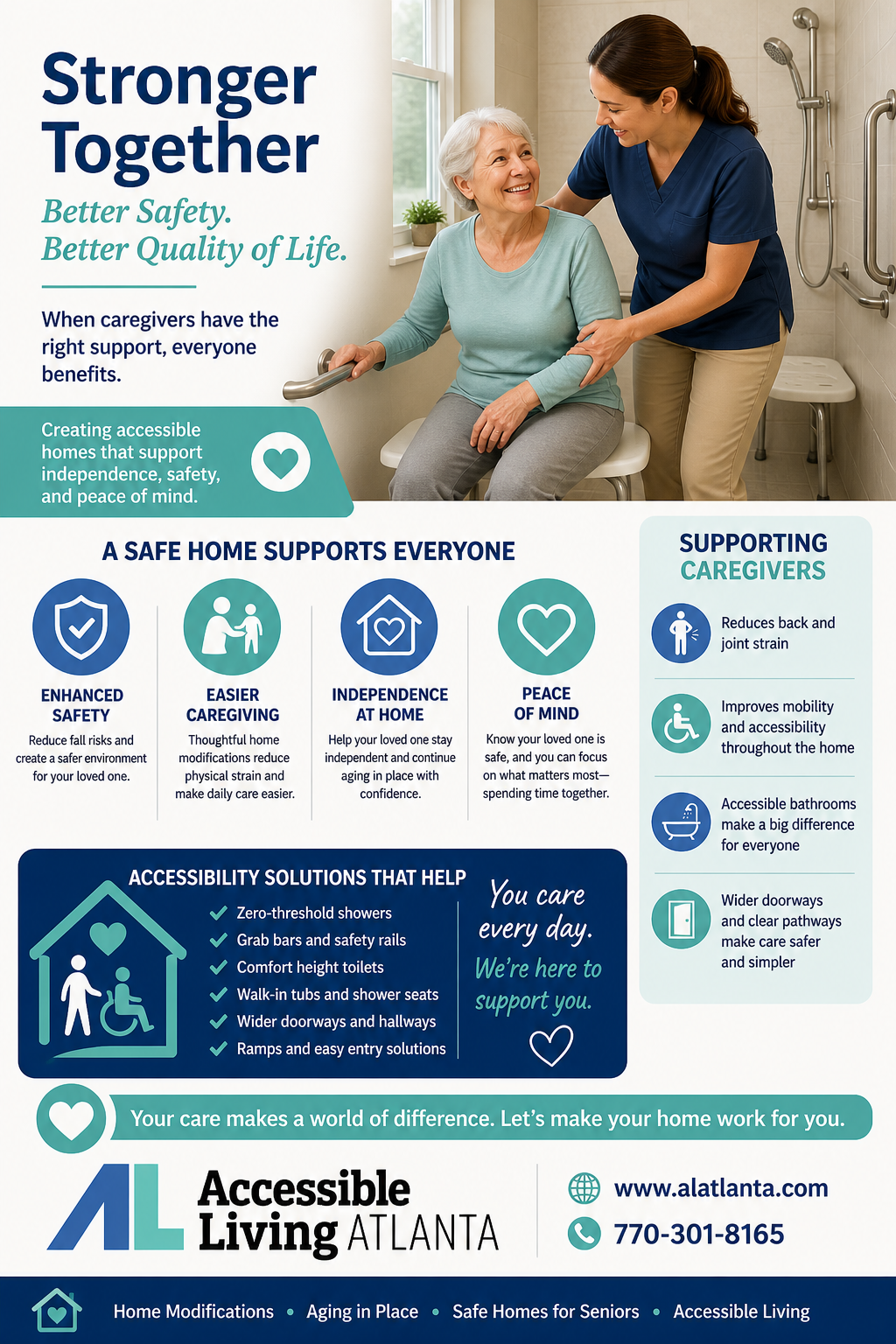
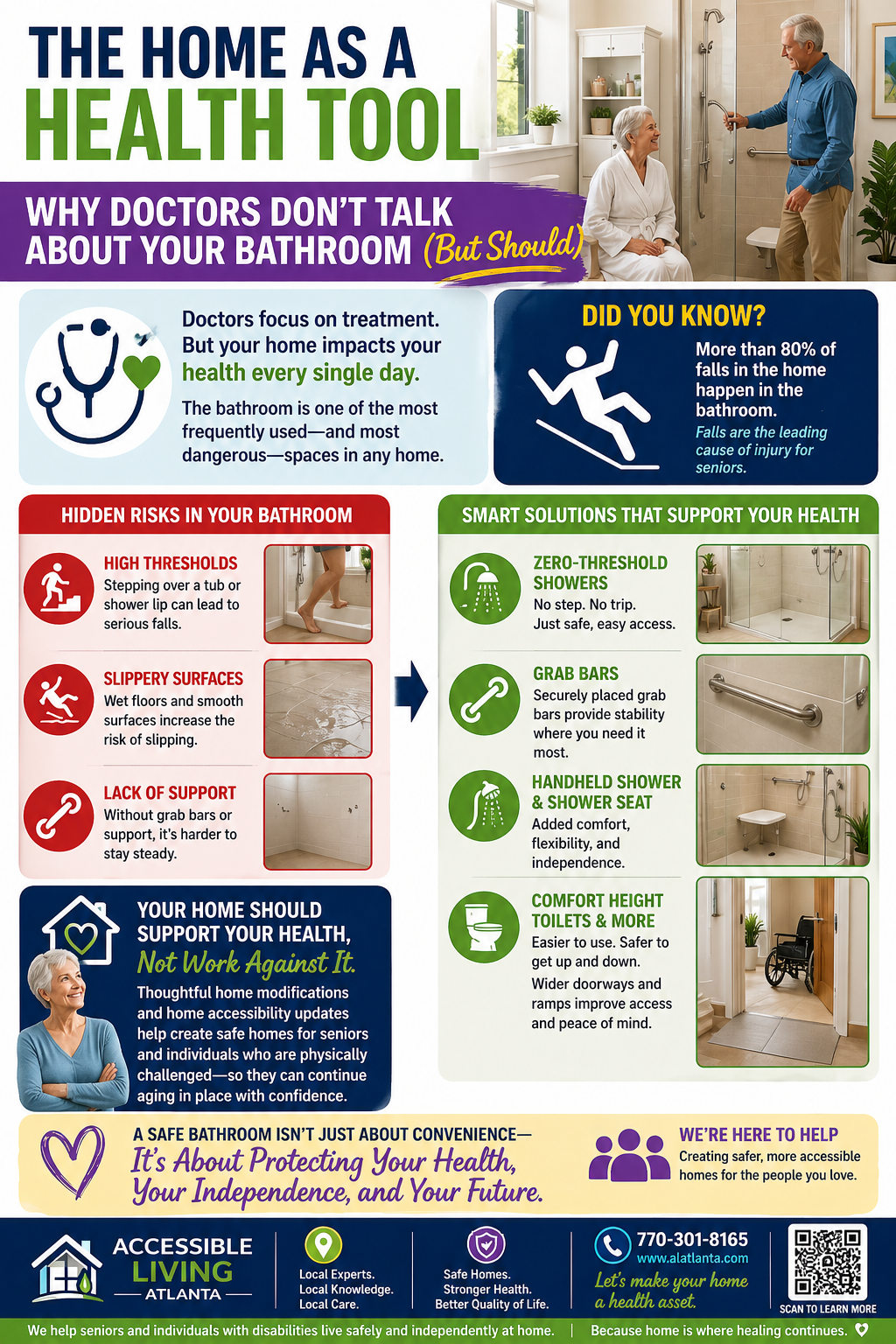
Flyer for Accessible Living Atlanta on home modifications for safe aging, including photos of accessible home features.
March 20, 2026
The word ARCHI comes from the Greek meaning “chief,” “principal,” or “foundational.” It is the root of words like architecture and hierarchy —both of which play an important role in how we think about aging safely and independently.
Three people standing in a bathroom, discussing architectural plans for a home renovation.
March 18, 2026
Over the past several years, I’ve heard the same concern from many aging-in-place professionals. They say something like this: "Everyone says aging in place is a huge opportunity… but I’m not seeing the clients." If you’re feeling that way, you’re not imagining it. The reality is that aging-in-place remodeling is growing rapidly , but the work is not always flowing to the professionals who specialize in home safety assessments. Instead, much of the demand is going directly to contractors and remodelers . Let’s take a closer look at the numbers and the reasons behind this disconnect. The Aging-in-Place Remodeling Market Is Growing First, the data does show strong growth in the remodeling industry. In the United States, homeowners spend hundreds of billions of dollars every year on home improvements . Recent research shows: U.S. home improvement spending reached about $534 billion in 2024 Experts project it will grow to over $680 billion by 2033 Remodeling has also become a much larger part of the housing industry. In 2007, remodeling made up about 33 percent of residential construction spending . Today, that number has grown to about 44 percent . This means homeowners are spending more money upgrading existing homes instead of moving or building new ones. A significant portion of remodeling spending is driven by the needs of older adults, with industry surveys showing that over 70 percent of aging-in-place modification requests come from homeowners age 65 and older. ( NAHB ) The Aging Population Is Driving Home Modifications The reason is simple. Most older adults want to remain in their homes. Research consistently shows that: Nearly 90 percent of adults over age 65 want to age in place About three-quarters of adults over 50 say staying in their home is their goal At the same time, most homes were never designed for aging . Some estimates suggest that only about 10 percent of homes are aging-ready . This creates a large gap between what people want and what their homes can safely support. That gap is driving a growing market for aging-in-place remodeling. Some estimates place the aging-in-place renovation market at over $74 billion today , with projections exceeding $100 billion within the next decade . Remodelers Are Seeing the Demand When researchers ask remodelers about aging-in-place projects, they consistently report growing demand. Surveys show: More than 70 percent of remodelers say requests for aging-in-place features have increased ( eyeonhousing.org ) Over half of remodelers are already completing aging-in-place modification projects ( housingwire.com ) Common projects include: Walk-in or curbless showers Grab bars in bathrooms Ramps and step-free entrances Wider doorways Non-slip flooring Improved lighting These modifications make homes safer and easier for older adults to navigate. So yes, the demand for aging-in-place improvements is real. But here is where the story gets more complicated. Why Contractors Often Get the Work Instead of Assessors Even though aging-in-place professionals specialize in home safety assessments, many homeowners never hire one. Instead, they go directly to contractors. There are several reasons for this. 1. Homeowners Do Not Know Home Safety Assessments Exist Most people simply do not know that aging-in-place assessments are a service. When a homeowner begins searching online, they usually type things like: “Bathroom remodel” “Grab bar installation” “Walk-in shower” “Wheelchair ramp” They rarely search for: “Home safety assessment” “aging-in-place evaluation” Because of this, contractors become the first professionals they find. 2. Contractors Sell a Visible Solution Another reason is psychological. Contractors sell a clear, visible solution . A contractor might say: "We can install a walk-in shower and grab bars." An assessor might say: "We will evaluate your home and provide recommendations." To many homeowners, the first option feels more concrete. They see a product or improvement right away. 3. Insurance Rarely Pays for Assessments Financial factors also play a role. Most aging-in-place assessments must be paid out of pocket . Insurance rarely covers them. However, home modifications are often paid for through: Home equity loans Remodeling budgets Renovation financing Because of this, homeowners sometimes skip the assessment and go directly to the renovation. 4. Contractors Often Do Informal “Assessments” In many cases, contractors end up doing the evaluation themselves. The process often looks like this: A homeowner calls a remodeler The remodeler walks through the home They recommend safety improvements From the homeowner’s perspective, the assessment has already happened. So they never seek a separate professional evaluation. Why This Is a Problem From a clinical perspective, this approach can miss important issues. A proper aging-in-place assessment looks at much more than home design. It should consider: Mobility and balance Vision changes Cognitive function Caregiver needs Future physical decline Daily routines inside the home These factors help ensure that modifications truly support long-term independence. Without this deeper evaluation, homeowners sometimes make renovations that solve today’s problem but not tomorrow’s. The Opportunity for Aging-in-Place Professionals Even though contractors currently receive much of the work, the opportunity for aging-in-place professionals still exists. But the opportunity may depend on working alongside remodelers instead of competing with them . Many successful professionals build partnerships with: Contractors Remodelers Occupational therapists Home care agencies Senior service providers By collaborating, they help ensure that home modifications are based on both safety and function . The Bottom Line The aging-in-place market is real. Demographics, housing trends, and homeowner preferences all point to growing demand for safer homes. However, much of the current demand is flowing through remodeling companies rather than assessment professionals . Understanding this reality can help aging-in-place specialists rethink how they position their services and how they connect with homeowners. Because when safety, accessibility, and independence are done right, aging in place becomes much more than a remodeling project.  It becomes a plan for living well at home.
Infographic showing home accessibility modifications for mobility needs across three stages: early, middle, and late.
March 13, 2026
Serious mobility loss can happen gradually — or instantly. Conditions such as ALS, MS, Muscular Dystrophy, Parkinson’s disease, stroke, and traumatic injuries often change a person’s ability to move safely inside their own home.
More Posts